
Black is not a color despite the very title of this post. Black, gray and white are technically all ‘shades’ along the same spectrum. This can make it seem complicated but it’s quite simple since ‘shades’ are much easier to pair than actual colors! There is no color blocking or matching when it comes to black which is why the saying of “black goes with everything” is partially true!
Black should be a staple part of everyone’s wardrobe since it is easy to maintain as it doesn’t get dirty easily, pairs easily with colors, and is seen as ‘formal’ or ‘sophisticated’. It’s very easy to not mess up wearing black, but it is difficult to master.
But that isn’t to say you should always wear black and wear it with anything. It is definitely the easy route but you can fall into the trap of owning nothing but black, which in my personal opinion, is very boring.
Black has a social context of being formal and sophisticated because of how it stays clean, and is easy to clean. There’s much more to it historically so if you want a history lesson, just read the Wikipedia page on black (skip the science section). Given how easy it is to look sleek and professional wearing black, it also is a go to choice for that reason. There was also an ongoing joke where I used to work how if you want to “look fashion” get it in black.
For some aesthetics, like goth or punk styles, you’ll probably own lots of black anyway. However if you are someone who likes to wear pastel colors you won’t need much black in your wardrobe.
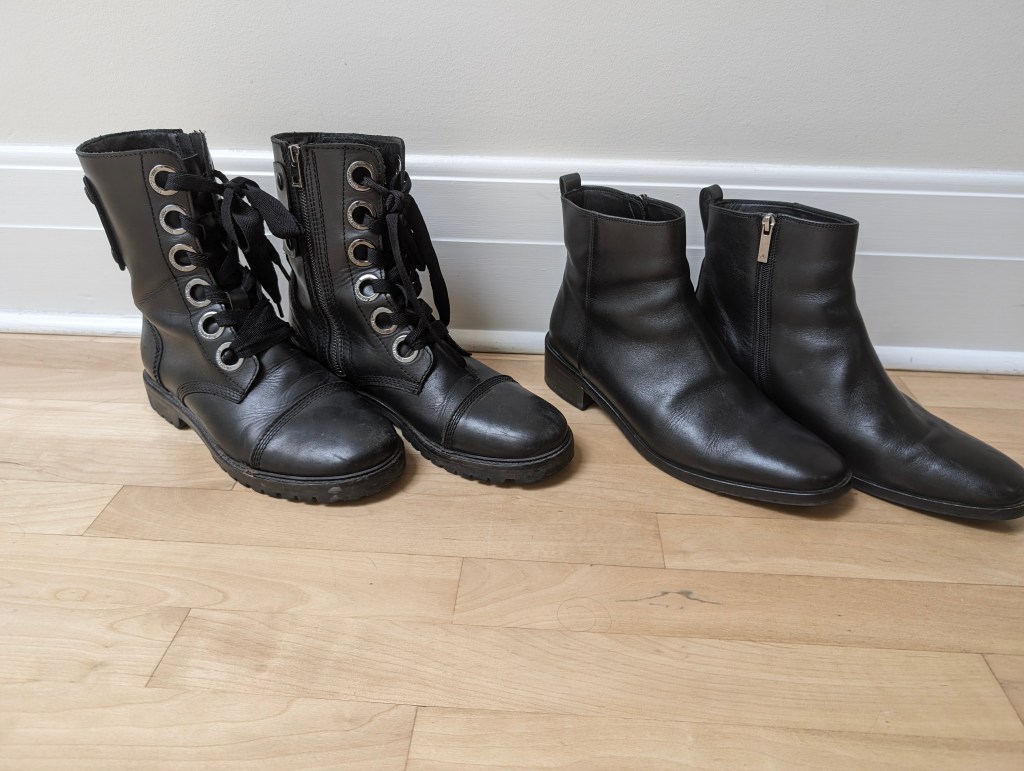
The key to keeping black interesting, is remembering that clothes have different textures. Black leather will not look the same as black cotton, or black lace, or black suede, etc. Finding the right balance to texture and breaks in color or accent colors is part of this. Going further, even things made of the same material aren’t going to give off the same aesthetic either, comparing these 2 boots of mine.
Let’s look at an example with this leather jacket. The jacket is what we are going to focus on. Let’s pair it first with nothing but other black leather.
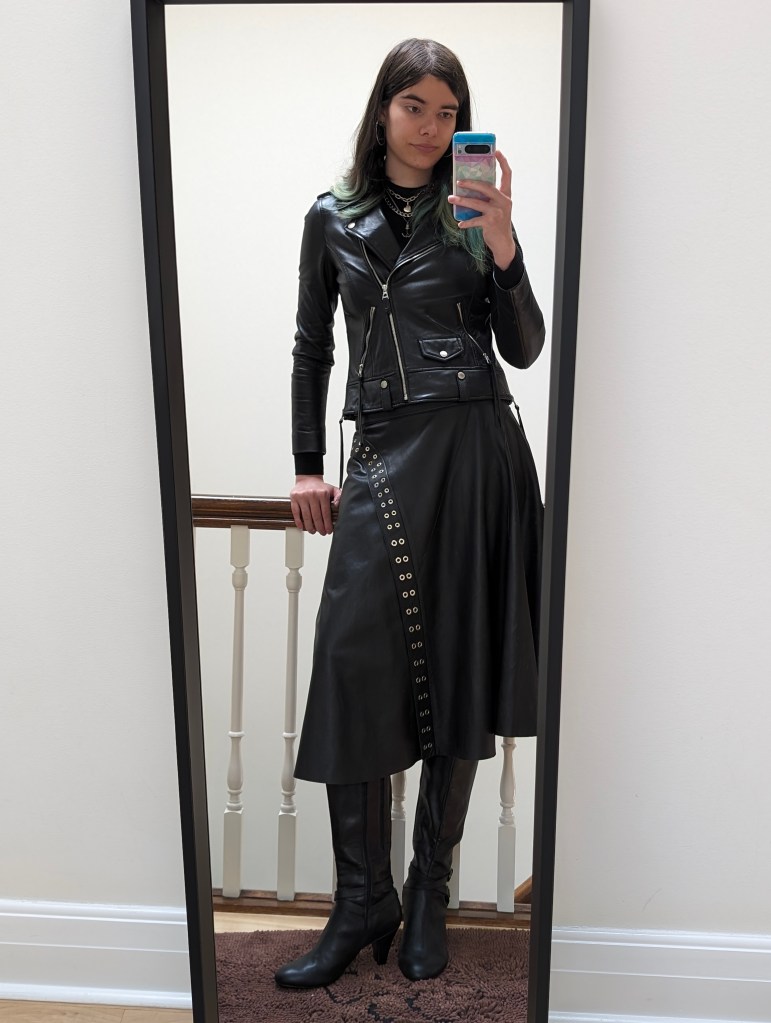
As you can see, it doesn’t quite look like an everyday outfit but more that I’m on my way to step on someone for money, which isn’t really my vibe.
Let’s change the skirt for some jeans and contrast it with different shoes as well pants.

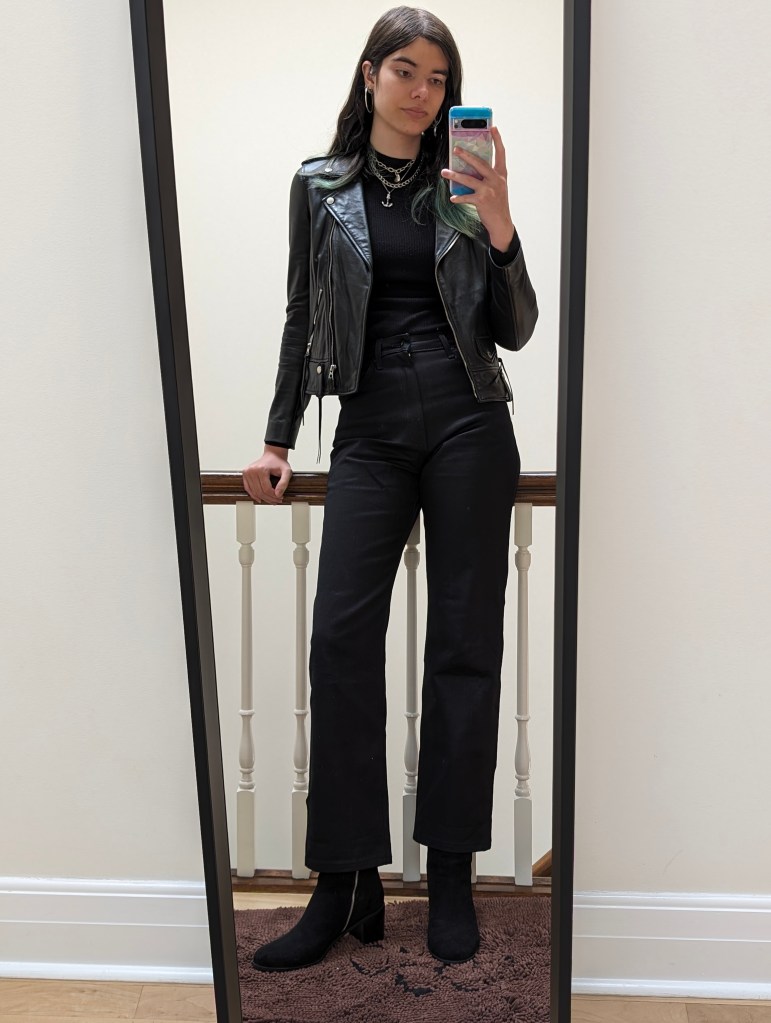
The difference is already rather dramatic! The slight variations in color from the jeans also help the outfit avoid looking ‘flat’. I would also avoid wearing shoes of the same material (so leather in this case) because it just looks a little awkward, exchange them for suede. Opening up the jacket to see more of the sweater’s material also reduces the domination of leather in the outfit, providing more balance.
It’s a little hard to pick up on camera, but this is already going to look more interesting than a black outfit made of 1 single material. That isn’t to say single materials look bad, but they don’t provide the DEI factor (diversity, equity and inclusion) that your outfit needs.
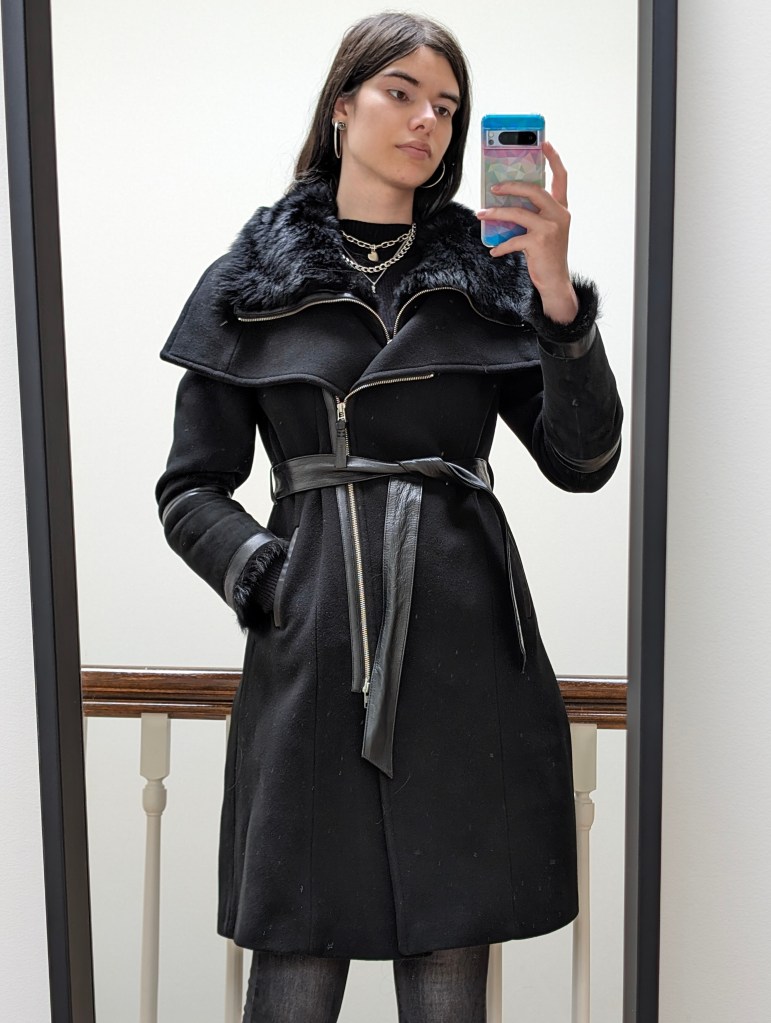
Using my super villainess coat as an example of this. A classic black wool coat doesn’t look bad by any standard, but it doesn’t have the same essence that this coat does. There are several details to it, the leather edges, the shearling cuffs, leather belt, the exposed zipper, the suede trim and faux-fur collar. There are lots of details to it and different textures that really make it a gorgeous coat.
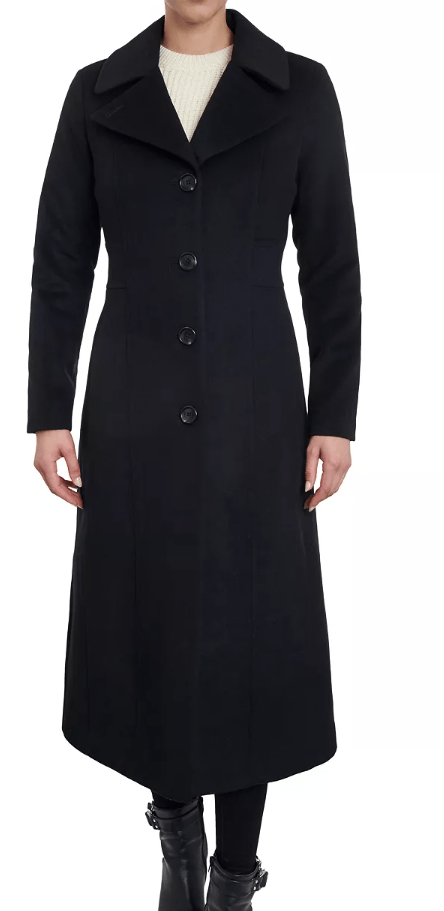
Black is also not all created equally. This extends to subtle differences in material as well. These clothes both advertise themselves as being ‘black’ but you can see a clear difference. This can be due to the dye or more likely in most cases, the material.

Fun fact! There is no ‘black’ clothing dye. For natural fabrics they are often dyed using REALLY dark green or REALLY dark blue. This is why you can notice subtle differences in color between some pieces that call themselves black!
The spectrum of black to white can often seem intimidating as there’s obviously a lot of options along the spectrum. Black works better than white in general due to it toning things down instead of brightening the outfit like white does.
Let’s understand why this is with a bit of science.
Hopefully some of you remember from school the ‘Visible Light Spectrum’. Black and white technically exist outside of the spectrum. Here is an explanation of it.

As you can see black is on one end, white is on the other. Black is the absorption of all light. The same thing can happen with your outfits! Black plays a supporting role, taking a step back and letting your colors shine by absorbing the light around itself. With all black outfits, consider black as the catalyst that lets the textures of your outfit shine, such as the leather of a leather jacket.
Black and white are on the opposite sides of the spectrum, and so they have opposite effects. Our eyes will perceive a color differently based on the environment that color is in. What this means is if you have a bright color surrounded by black, the color will pop out a lot more than if it were surrounded by white. This is called contrast, and is super important for all aspects of your outfits. Contrast in colors, contrast in materials, contrast in silhouettes.
As I was writing a longer explanation for this phenomena of how surrounding color warps your perception of color, I came across this 1 minute youtube video that explains it and demonstrates it better than I could. So I would recommend looking at this before continuing your assigned reading. https://www.youtube.com/shorts/ccLUxJvViUA
My personal motto for when to use black is for when I need contrast. Black adds contrast to an outfit (unless it is all black) but can tone overall the whole outfit down.
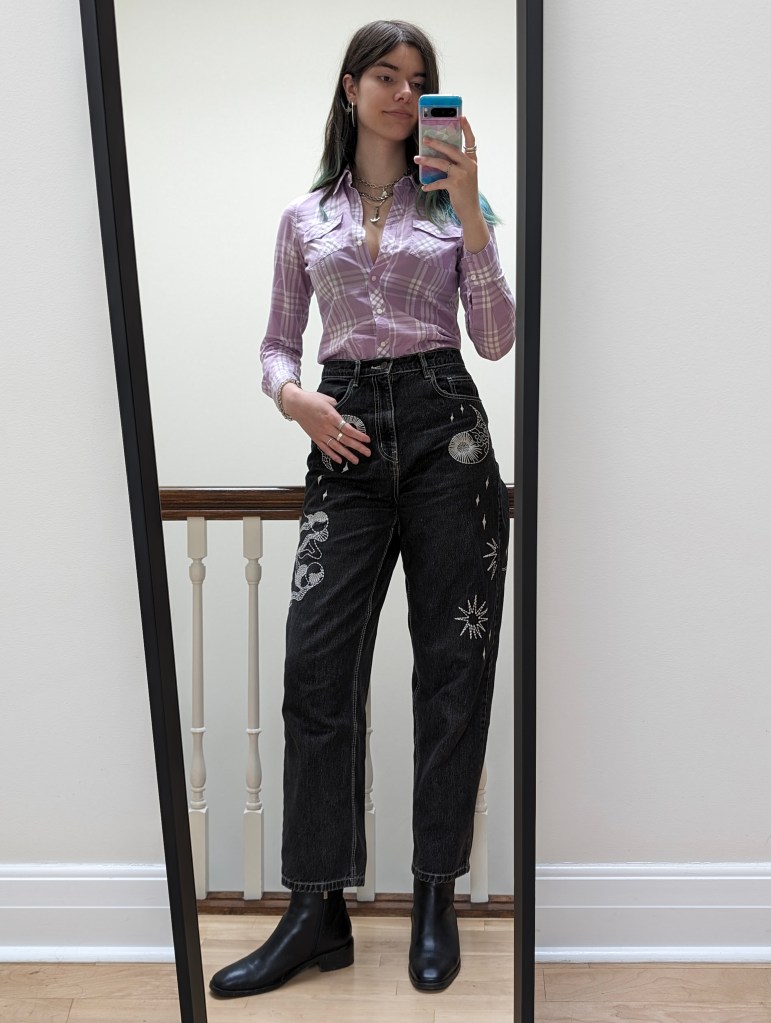
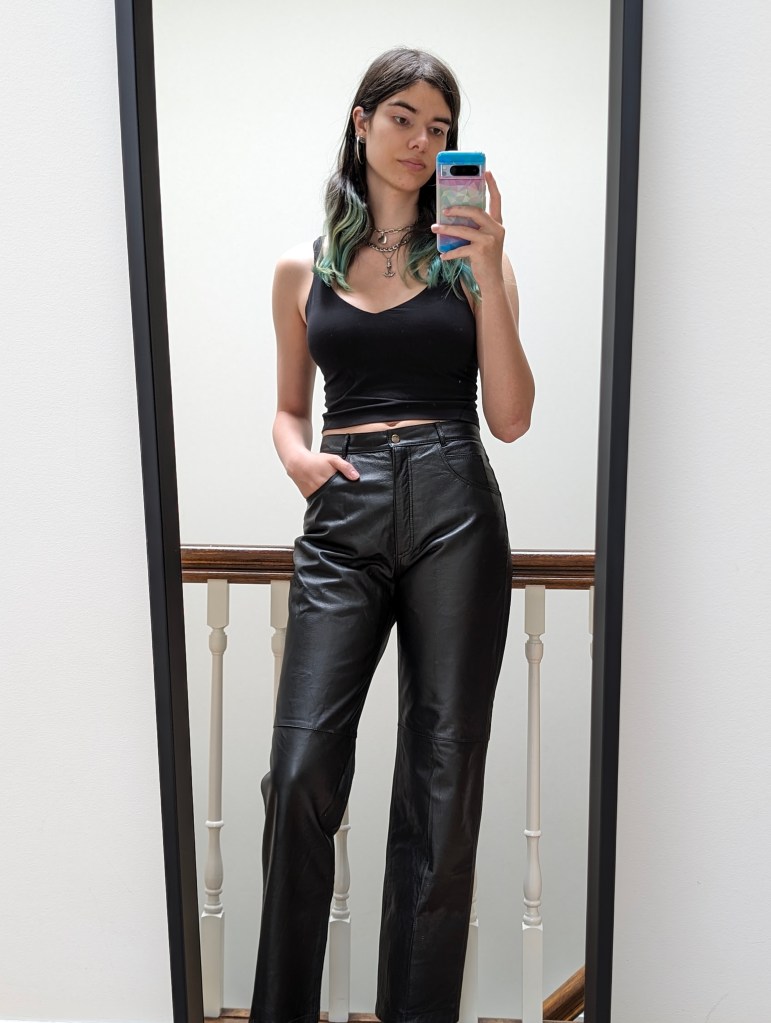
If your outfit still looks a little flat, I often use jewelry to make up the difference. Like silver bracelets, rings, necklaces, etc. They can work as some needed contrast, especially for outfits with long sleeves.
Skin also works for adding contrast. If you are wearing all black, skin can break up the continuation of black.
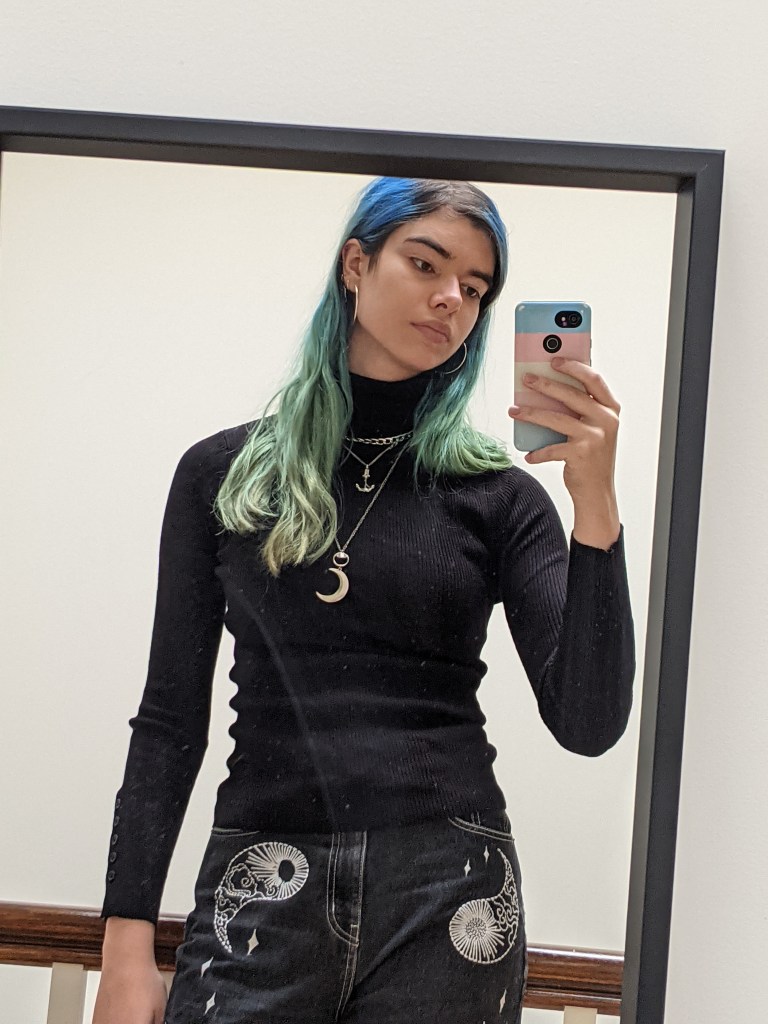
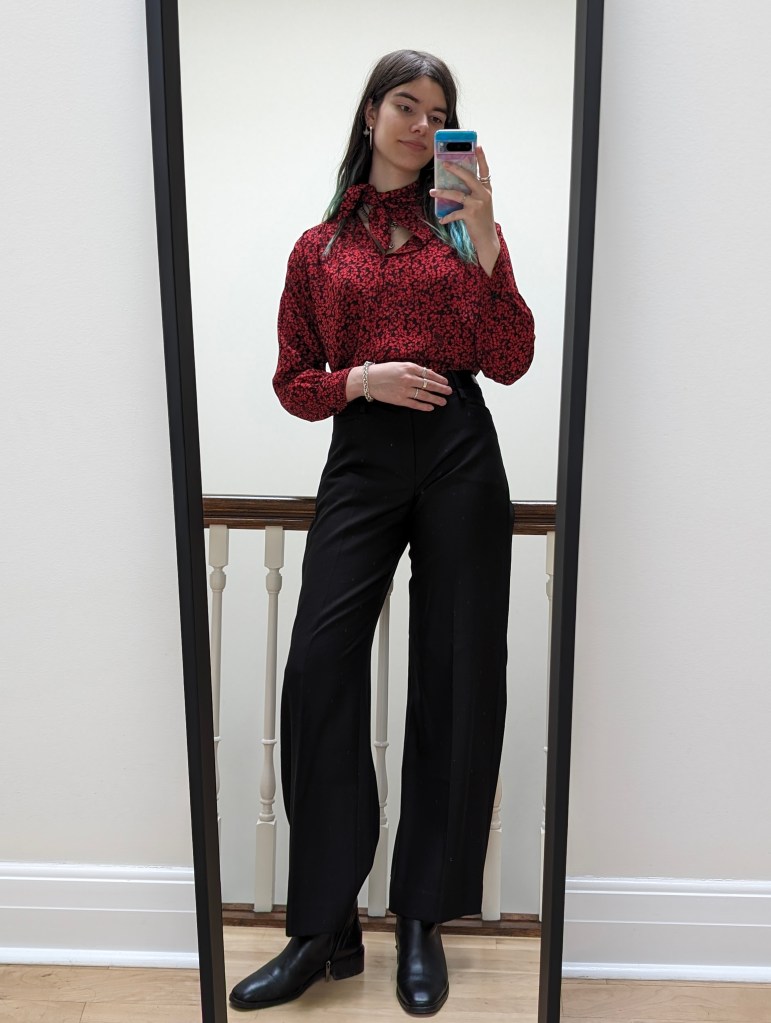
Single pieces that have a color, such as red, and black will benefit from the black making the red stand out more and pop. This is also why the stereotype of goth or punk styles that wear a lot of black also have dyed hair as one of their features. It really stands out a lot more. My dye has faded and this picture is rather old, but you can see what I mean.
Take these skirts as examples
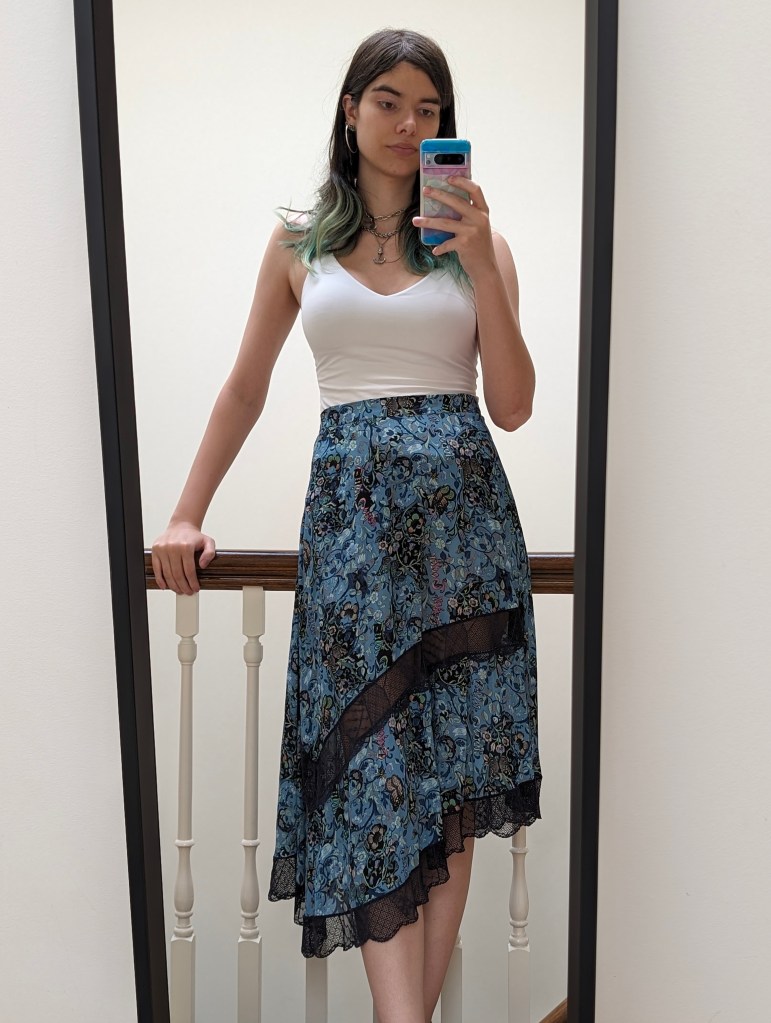
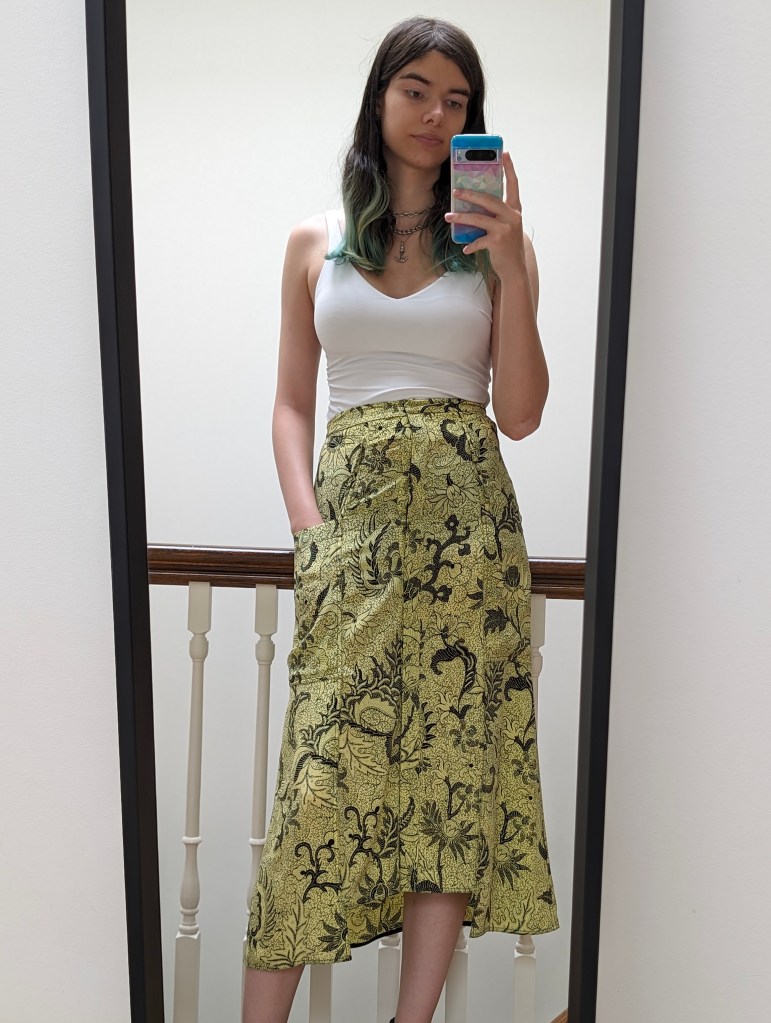
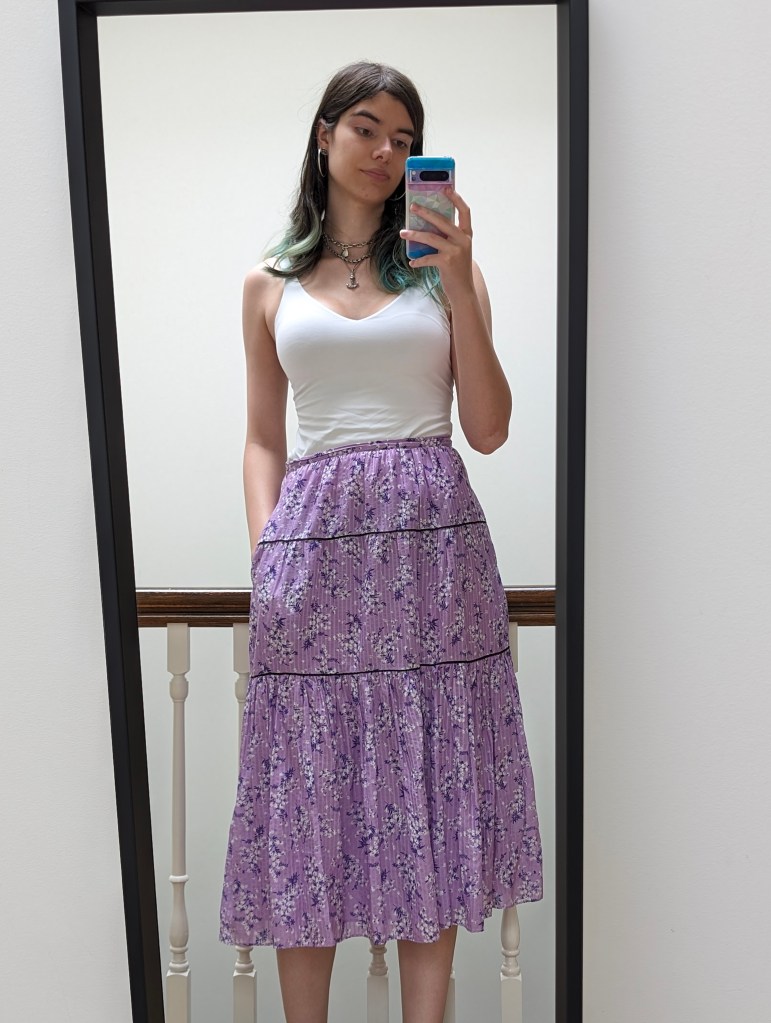
Pieces that have black as details will generally pair better with black compared to white. Let’s use this purple skirt white has small white flows as a comparison. Lighter colors, like the yellow or purple skirts, might still look better when paired with the white despite the black details. They are often interchangeable though, it will just depend on your preference.
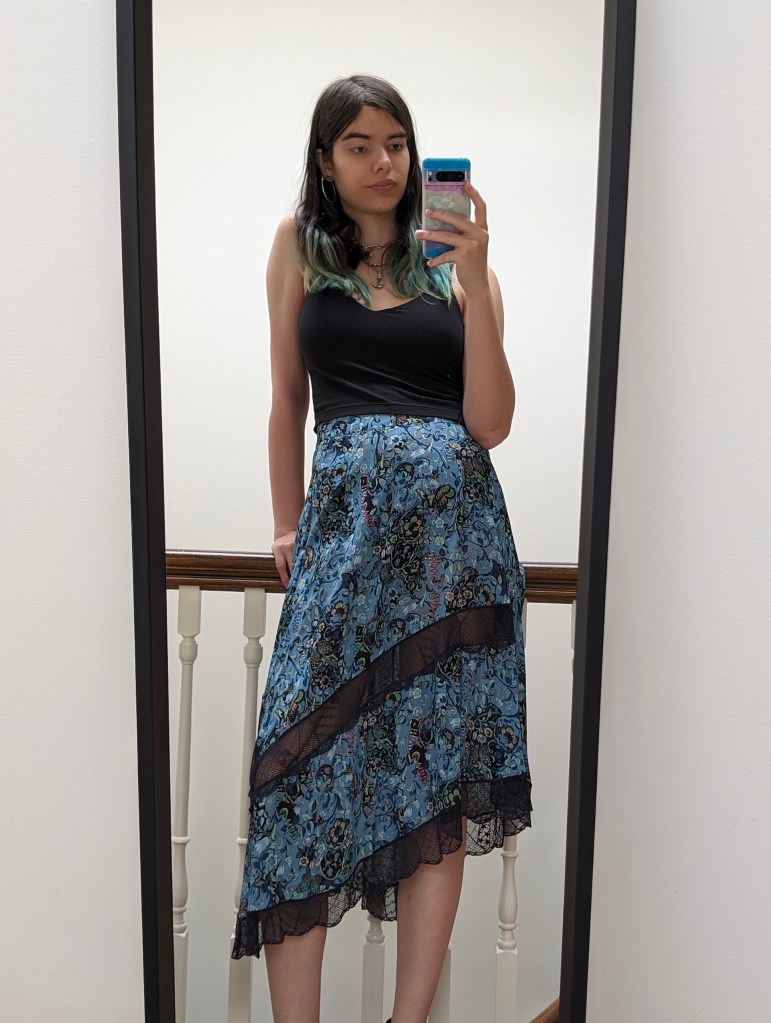
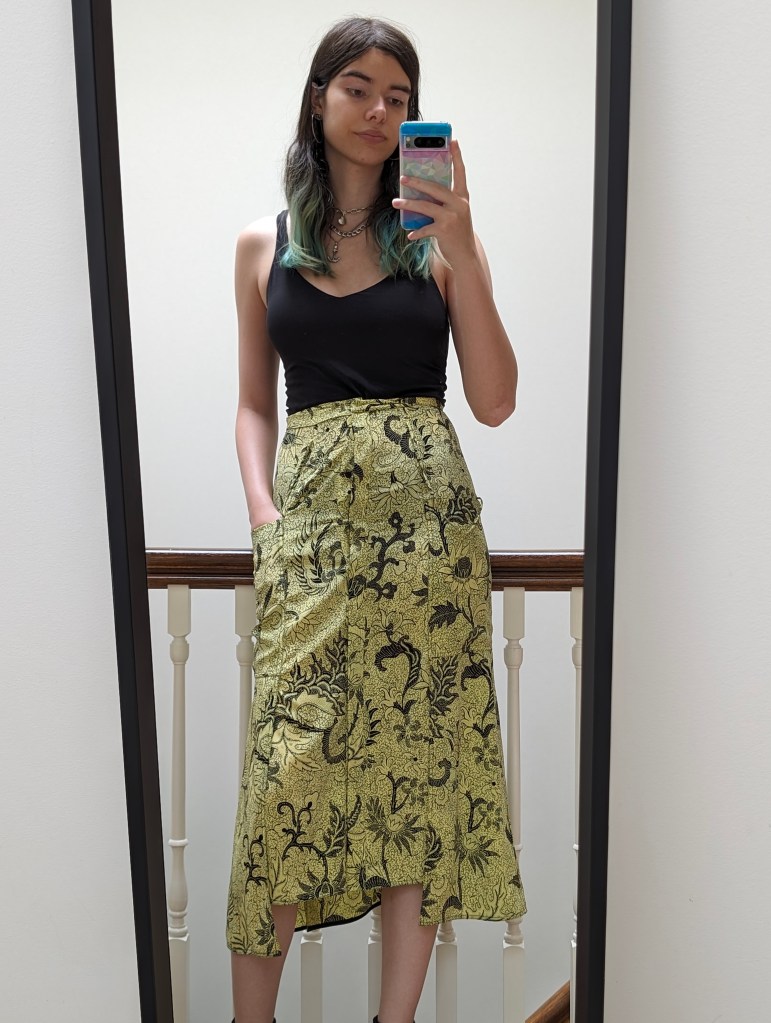
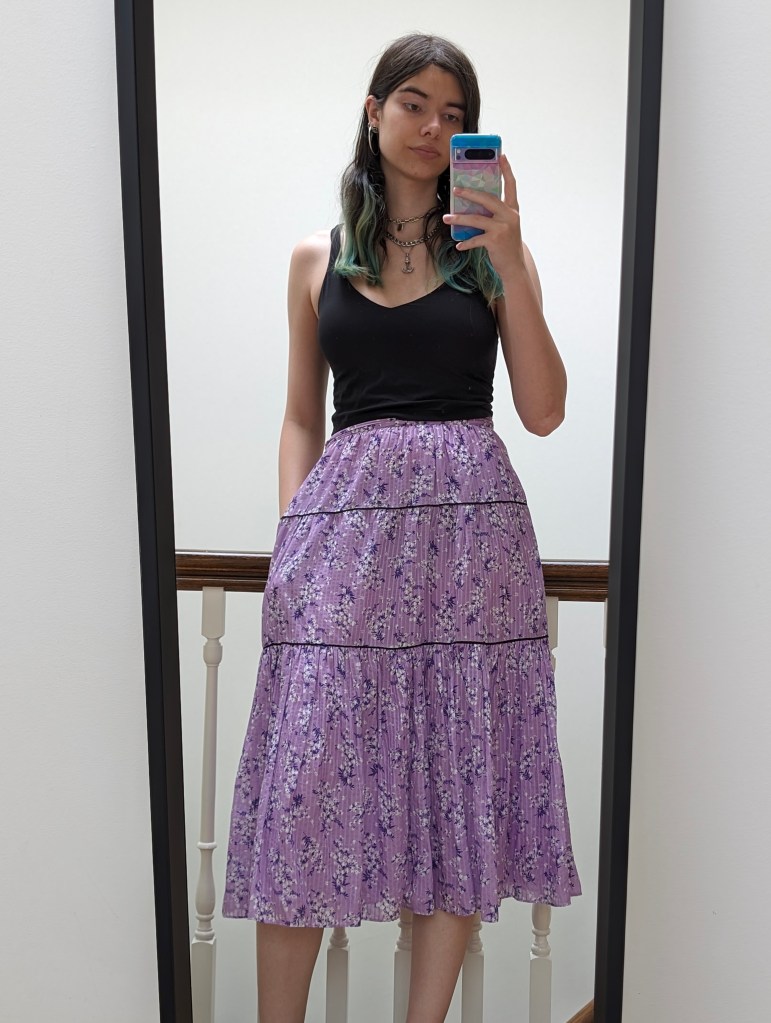
The same applies for tops.
Accessories, like belts, can also go a long way in adding enough subtle contrast that it makes what you’re wearing that much better.
This black dress with a belt and without one.

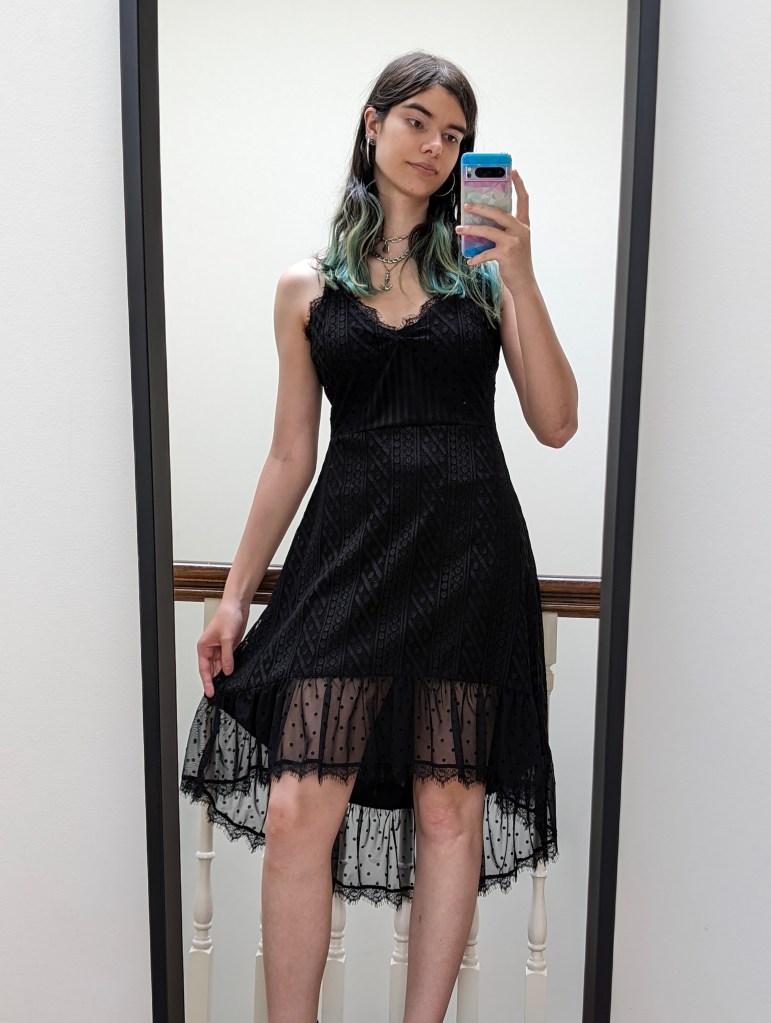
With this outfit, look at the differences between no belt, a white belt, and a black belt.
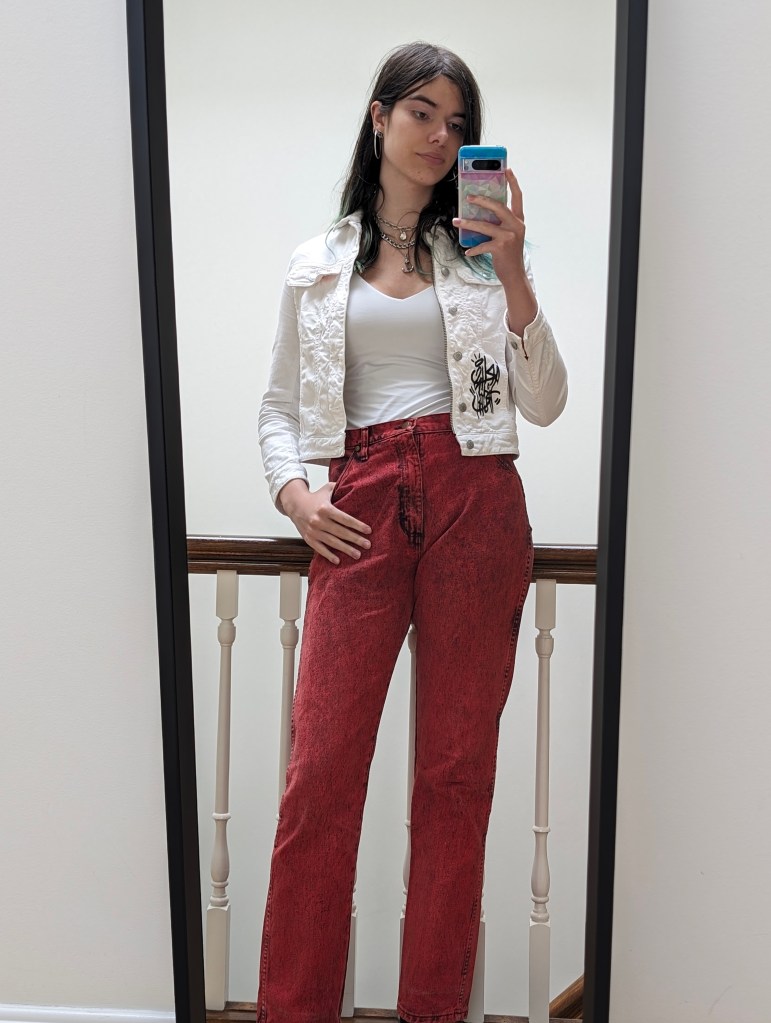
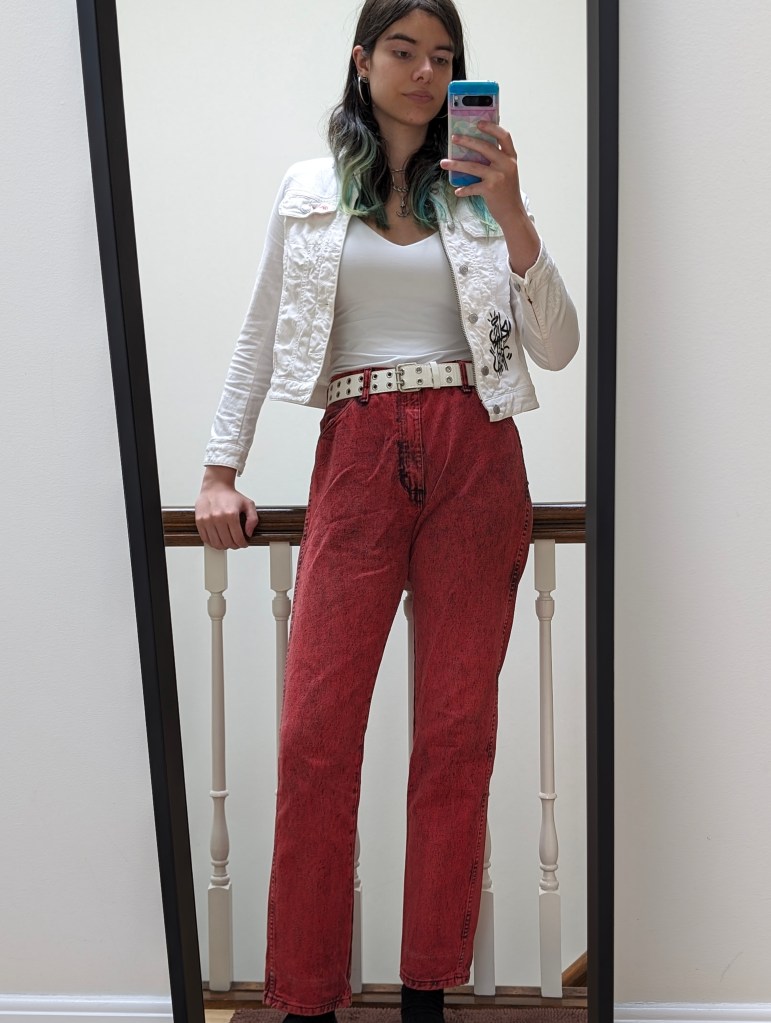
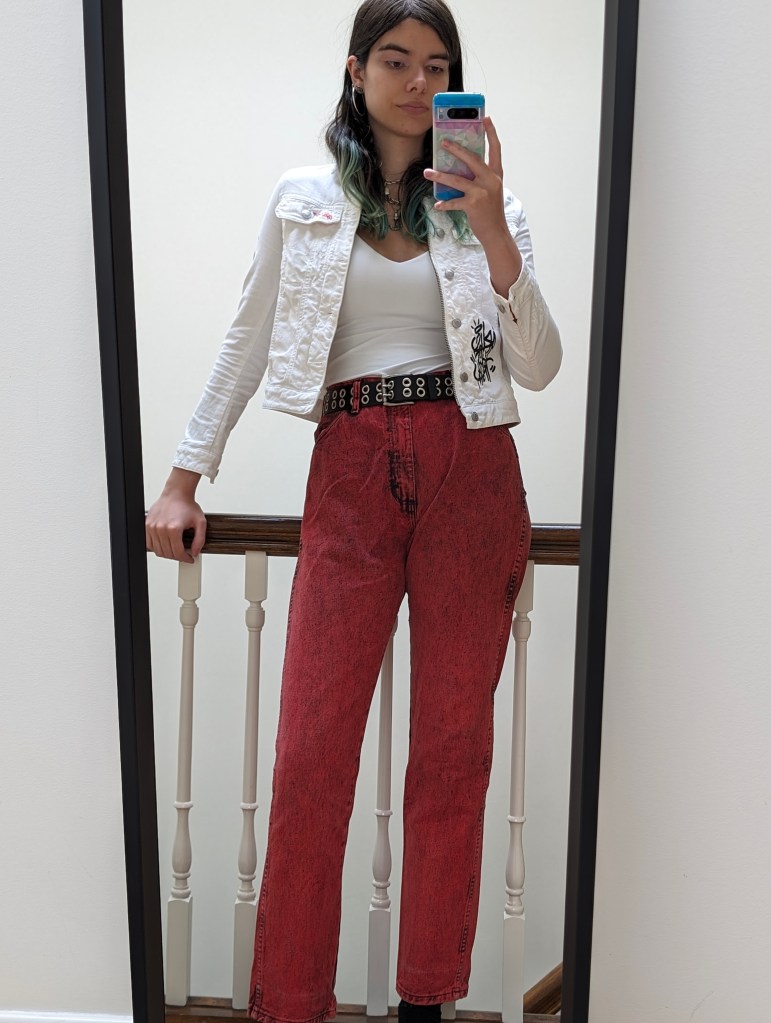
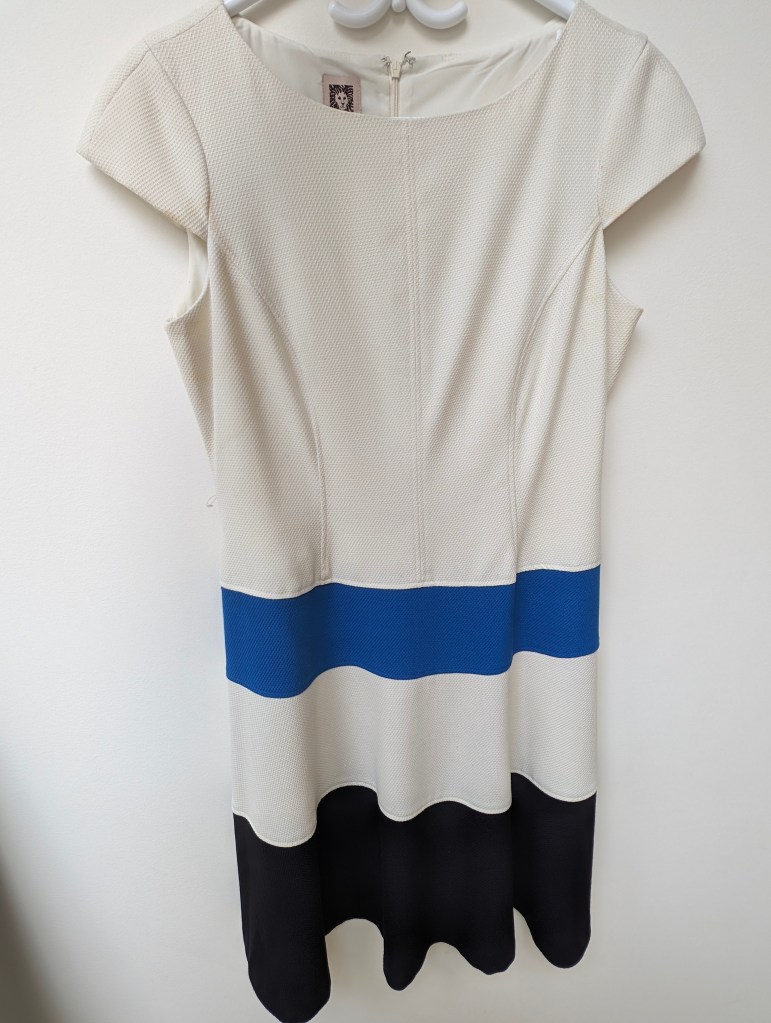
Black also adds a great way to break a continuous color like with the belt above, it helps define each piece and provide a smooth transition across the outfit’s different pieces. For more balanced looking pieces, you can often find a mix of white and black with a pop of color. Black helps it center on the color so it becomes the defining feature of the piece, even if it is not the dominant color. For these two pieces, black helps balance the overall piece so the whiter part isn’t washing out your skin tone, and helps frame the color better.
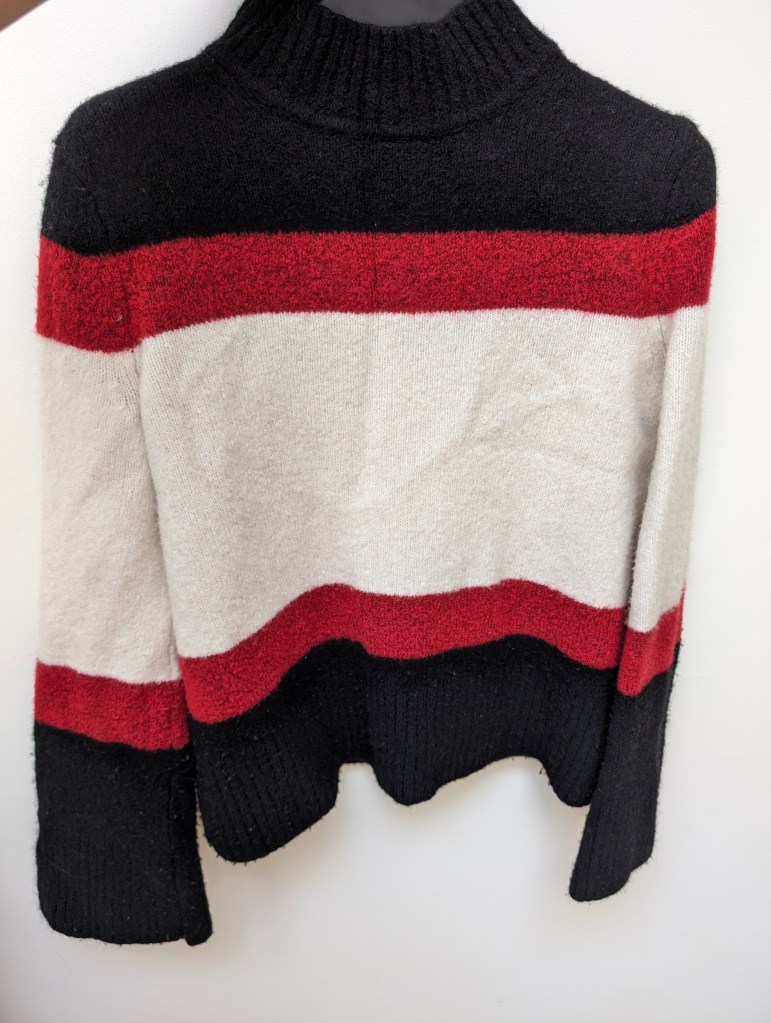
Another thing to consider is why black is the go to for bottoms and why white pants (or bottoms in general) suck. Our legs take up most of our body and so when we wear white bottoms they end up dominating our outfit. Black on the other hand is FAR better for bottoms because they are more subdued, think about how often you see someone with a white shirt and black pants vs. a black shirt and white pants.
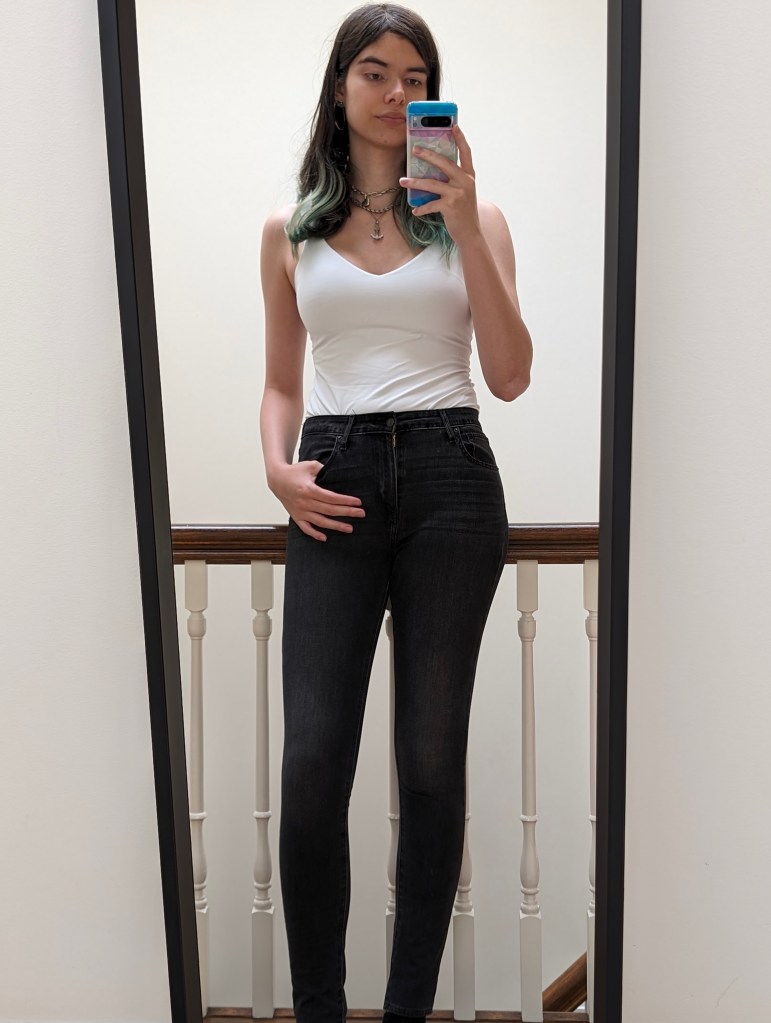
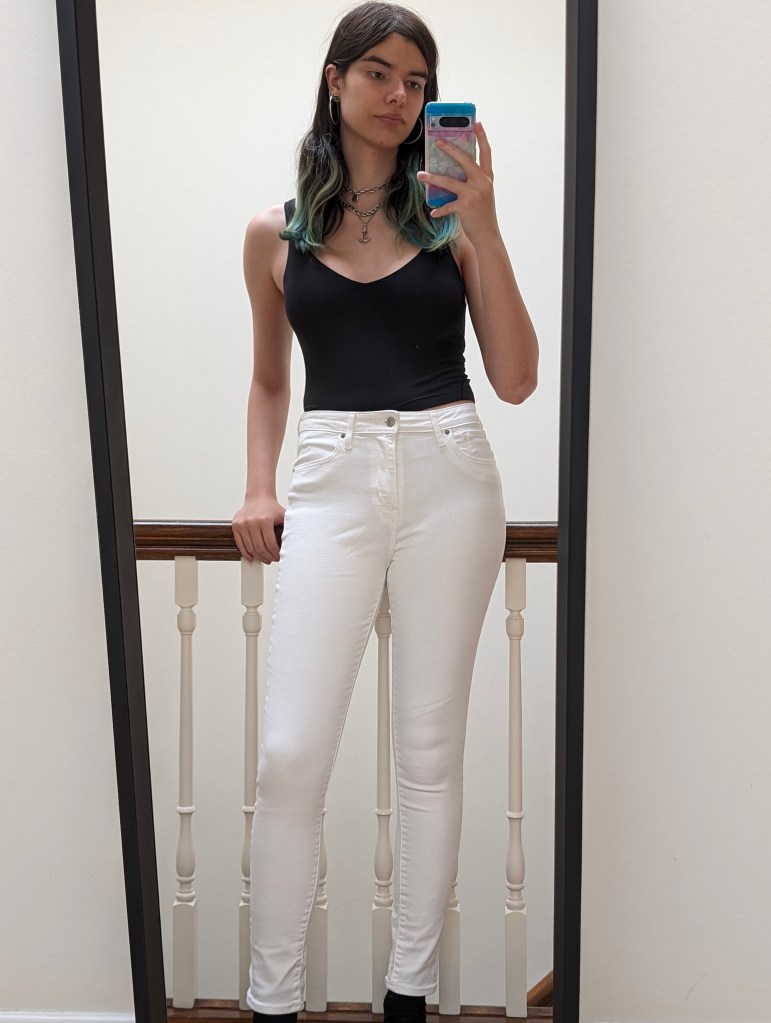
When I wear white bottoms it practically looks irritating to look at. Meanwhile, black lets colors stand out and, unlike white, brings everything to a calmness. White can overpower colors more easily than black does.
Especially so when our legs dominate the vertical space of our bodies, it’s harder to select white as the better choice for bottoms. It’s often considered a “summer color” for that reason, since you can wear white shorts or a skirt and it won’t look as jarring with the contrast of your skin tone and the white.
Because black is easier to hide stains, it’s another obvious advantage over white, especially for pants. It is rather hard to hide when you sat in something or spilled a drink on white pants.
Black also hides shadows which is why some people say ‘black is slimming’. I think the effects of this are rather minimal but if your dream is to appear as small as possible, it might help a bit.
The key for mainly all black outfits is to add subtly to changes of the texture of material (so leather with denim, cotton, etc.) or to add accent colors. As we covered before, contrast is super important! Adding subtle shades of variation in black can also work well depending on the piece. (picture white and black jeans vs black jeans.)
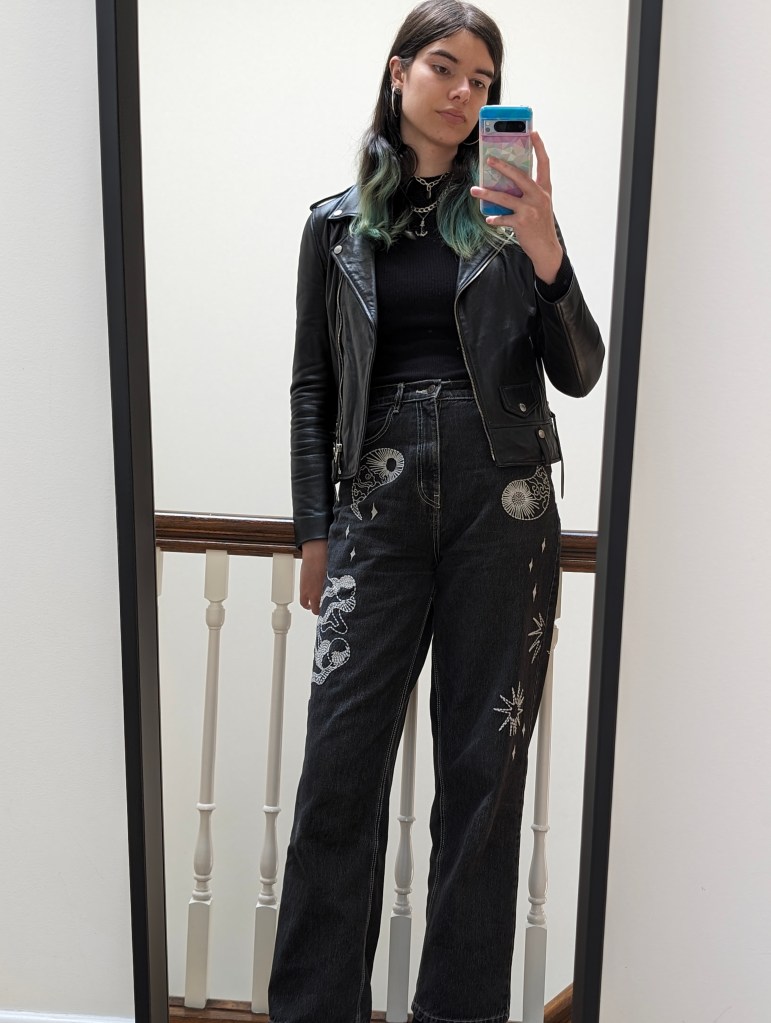
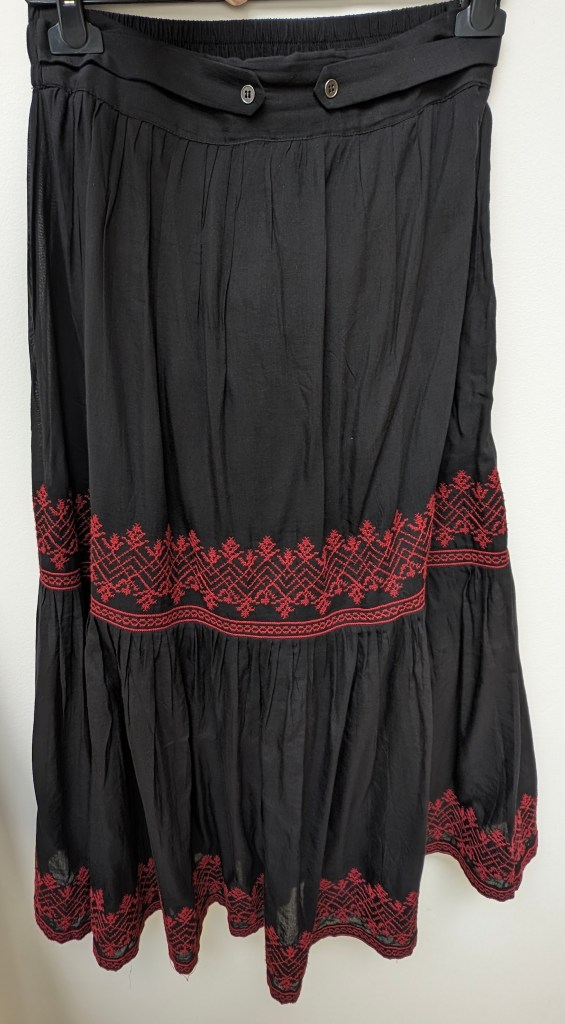
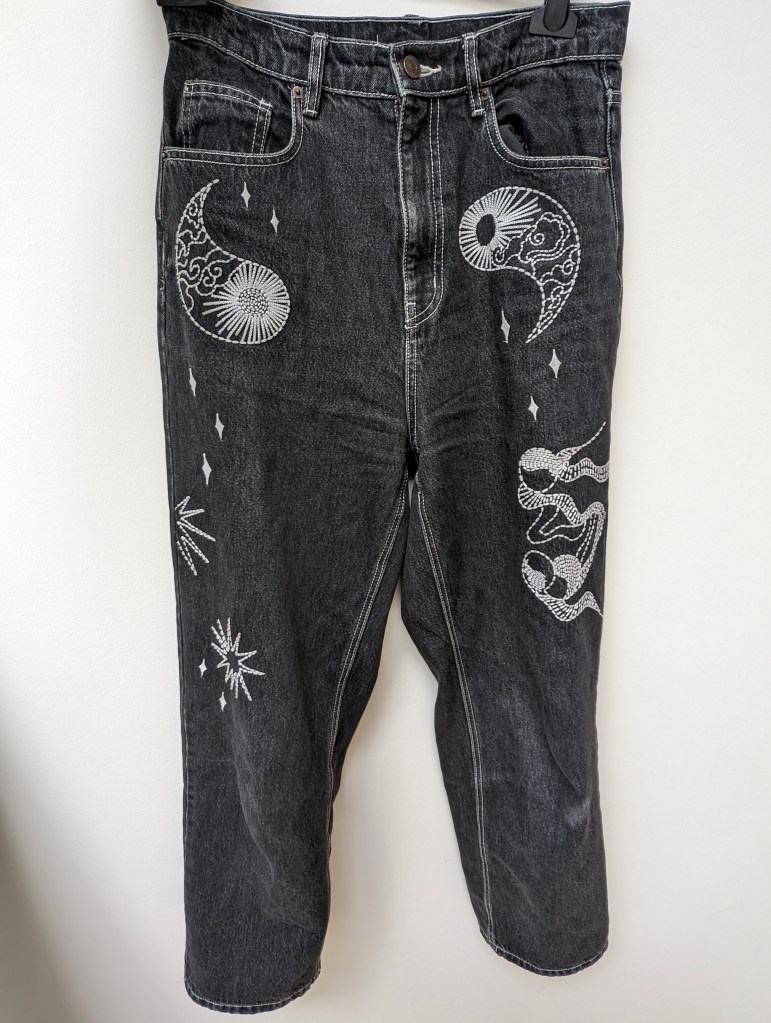
Looking at the pants and these hoodies, they provide more variation than solid black does, which in turn looks better overall.
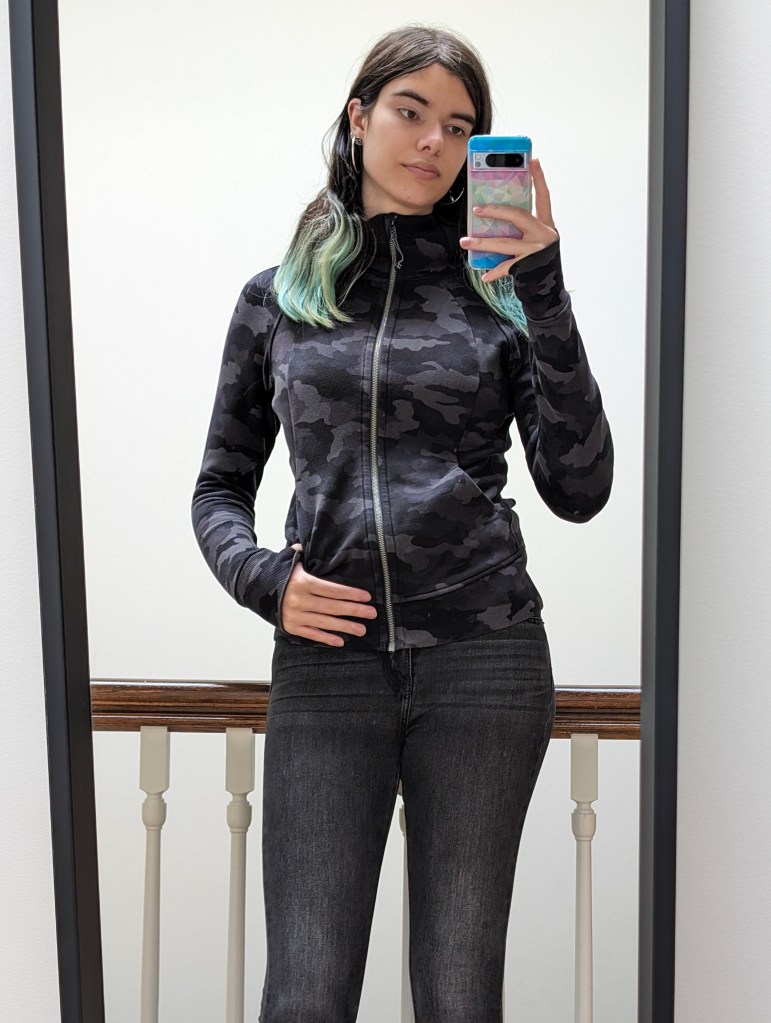
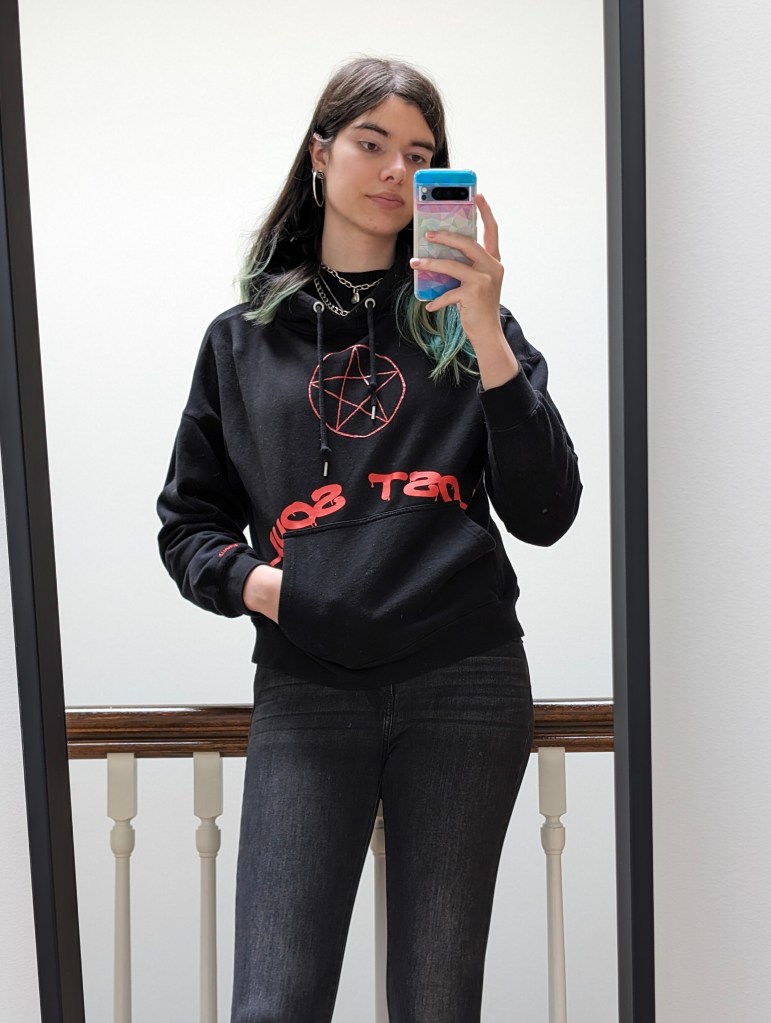
Because black is also considered a shade, it can be considered an honorary neutral color. Pair it easily with other neutrals such as blues, browns and white. It also goes well with all colors in the right balance
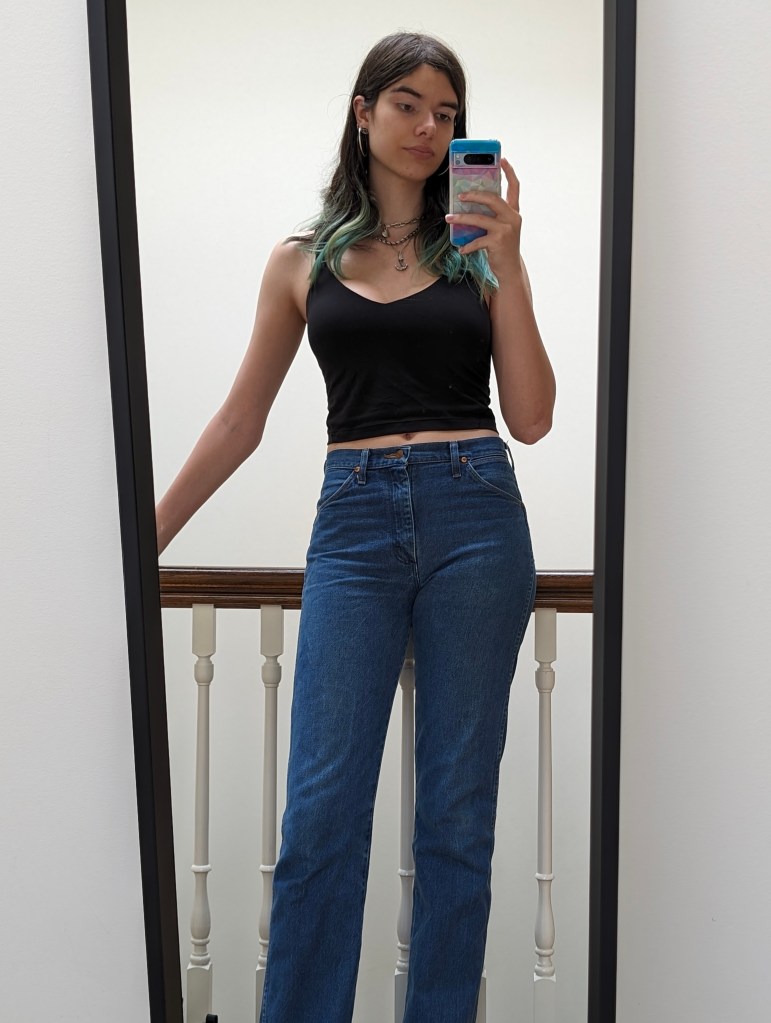

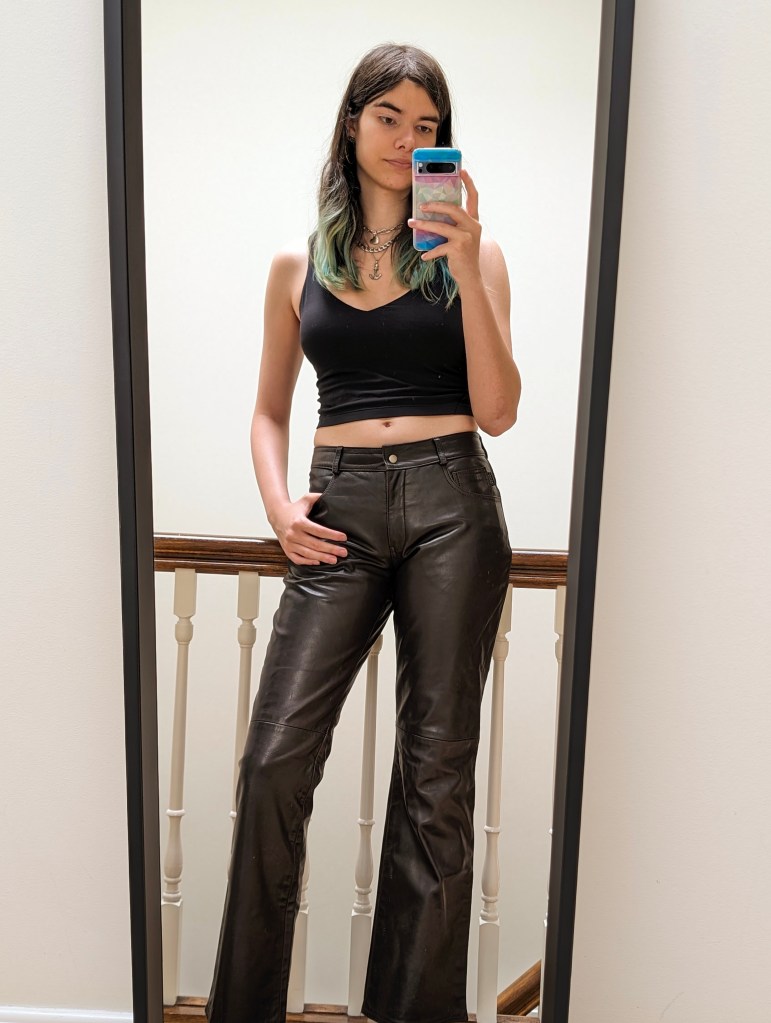
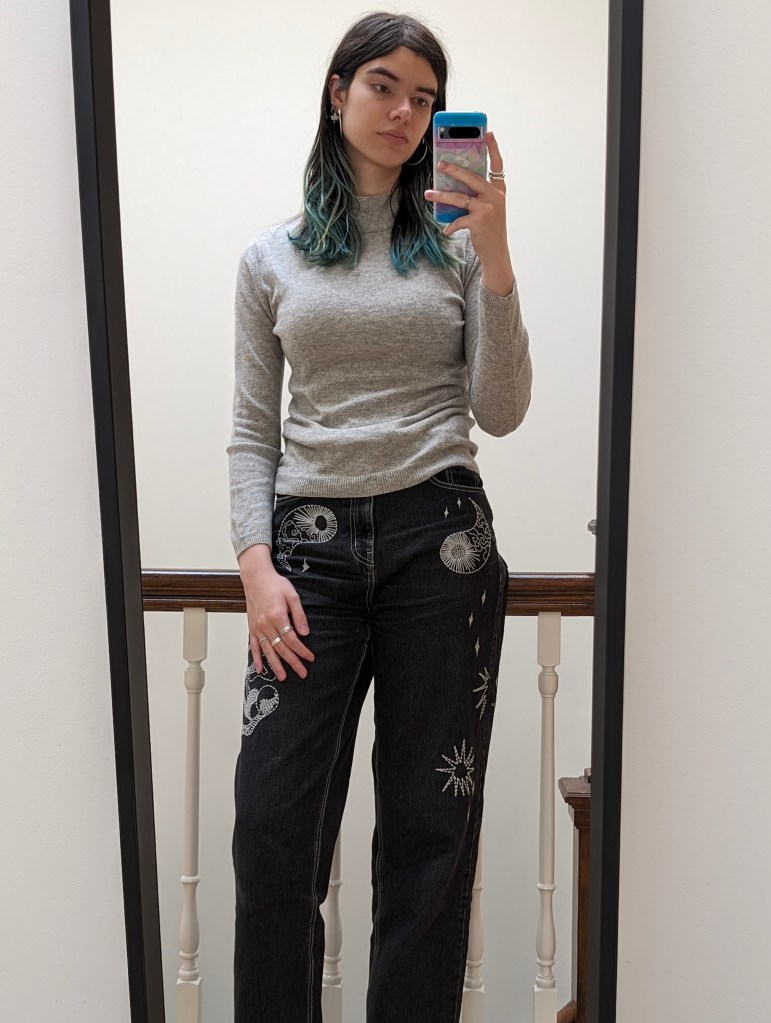
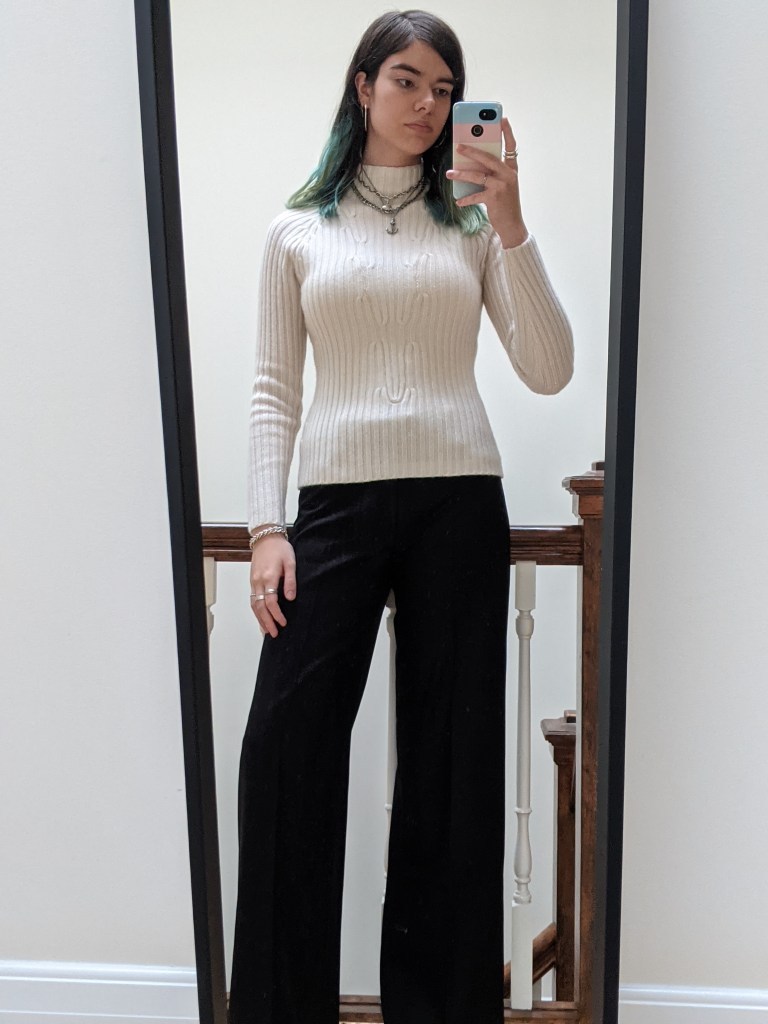
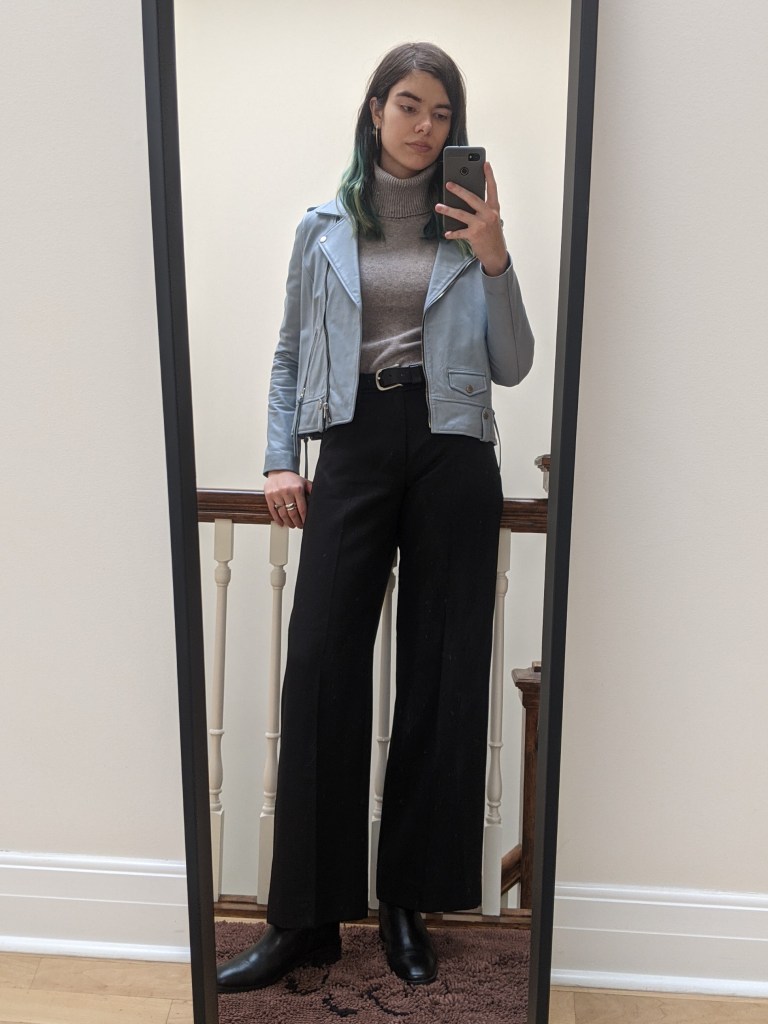
Hopefully this post helped demonstrate why black alone is boring, and what you can do to prevent it from seeming that way. All of the things you learned should demonstrate how versatile black is and why some people have nothing but black in their closets! Colors benefit from black, but it is capable of being the star of the show if you know what you’re doing.
In short
- Different material textures when pairing black on black
- Black is a shade, so it pairs easily with everything in a right balance
- Black adds contrast for other colors to pop out
- Silhouettes need variety for black to differentiate itself
- Not all ‘black’ dyes are the same, there will be subtle differences for pieces of clothing
- Our perception of color varies based on what is around it
- Extra details are key for making black shine, just don’t go overboard
 Transfemme Style
Leave a comment