
Skincare is something that seems a lot more complicated than it really is. Our skin is something that changes based on lots of factors, like humidity, hot or cold weather, how much we touch it and probably the most important for us, our hormones.
Starting HRT is a big step for many of us and it can fundamentally change our skin. Testosterone can be responsible for lots of the oil production for our body, hair and face. Estrogen (with a testosterone blocker) can cause your skin to be significantly drier than before, meaning you’ll need to adapt your skincare routine.
Determining your skin type is the absolute first thing you need to do before buying anything as it affects what products you should buy.
There’s
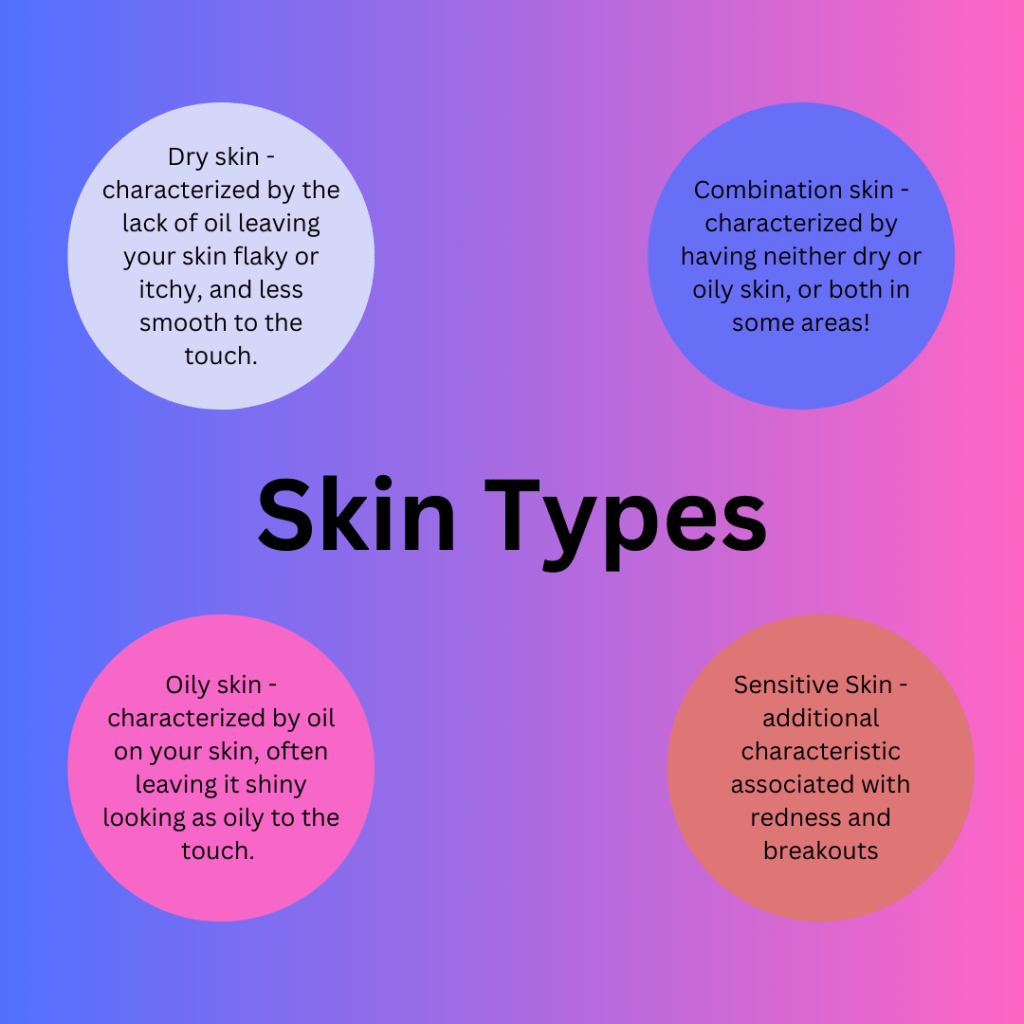
- Dry skin – characterized by the lack of oil leaving your skin flaky or itchy, and less smooth to the touch.
- Combination skin – characterized by having neither dry or oily skin, or both in some areas! For example my nose is extremely oily but the rest of my face isn’t oily or dry.
- Oily skin – characterized by oil on your skin, often leaving it shiny looking as oily to the touch. Common issues like pimples or acne can be caused by oily skin.
You may also have sensitive skin in addition to any particular skin type. Usually characterized by redness and sensitivity to a whole range of ingredients or products.
The main things you need for any solid skincare routine are
- A cleanser
- Moisturizer
- Sunscreen
- An exfoliating acid (for once or twice a week)
- Retinoid
- Antioxidant (like Vitamin C)
Anything outside of these 4 steps is optional; but the 2 things I would add if you can are a retinoid and vitamin C serum (or another antioxidant). They aren’t essential but can significantly help with most issues just learn what your skin can tolerate with them as they can be irritating if overused!
Forming a ‘routine’ of using your products is the most important aspect of skincare, your skin exists everyday and can’t be swapped out for something else; unlike your clothes when they’re dirty.
Skincare routines should also have 2 ‘phases’
- Defense in the morning
- Targeting issues you encounter throughout the day and to protect from outside elements (UV, pollution, etc.)
(Reapply sunscreen routinely during the day if you’re outside!)
- Rejuvenation at night
- Cleansing your skin and giving it a fresh start for the next morning with steps to soothe and repair your skin
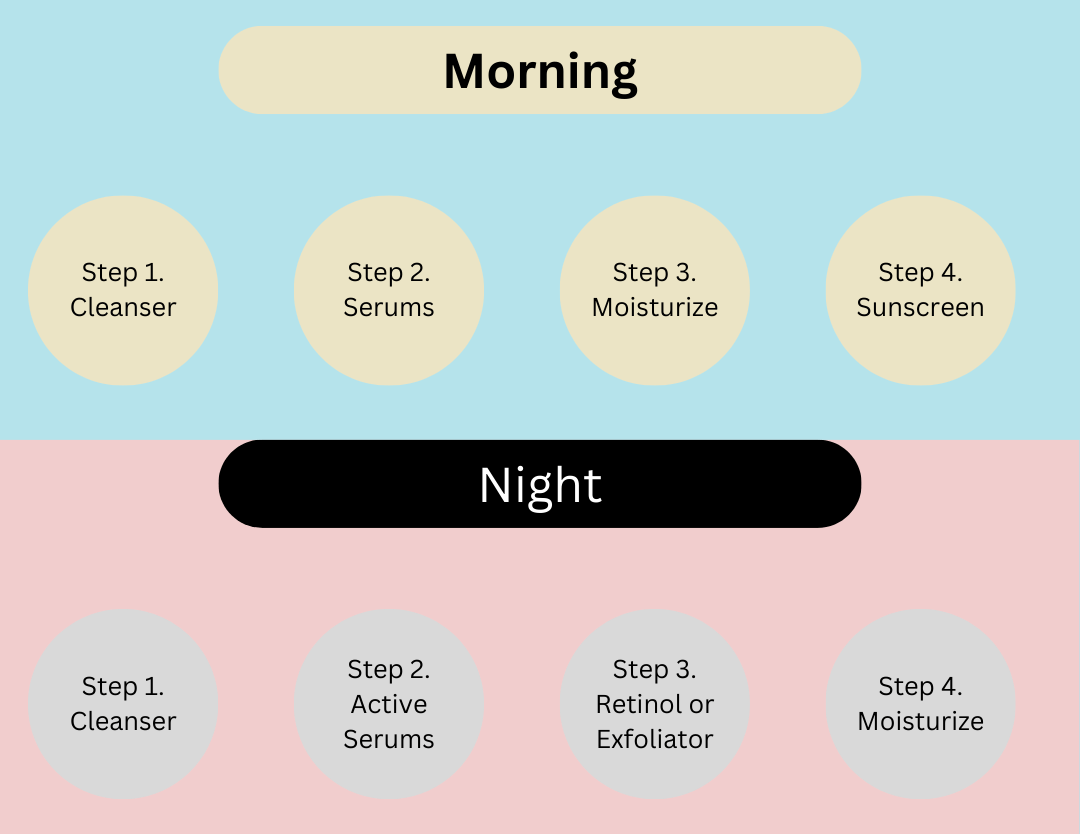
Wash your face with just water in the morning or a cleanser if you have oily skin, use your serums if you have any (excluding retinoid), and moisturize and sunscreen for finishing touches.
At night use your cleanser, any serums you have (including retinoid) , any creams, and moisturize. Once or twice a week depending on how your skin reacts you should use your cleanser, exfoliate, moisturize.
Steps in the Morning
- Cleanse (just water or with cleanser)
- Serums (like vitamin C)
- Moisturize (if needed)
- Sunscreen
Then after all of these steps is when you can apply makeup if you wear any.
I recommend doing this an hour or so before bed so products don’t get all over your pillow.
Steps at Night
- Cleanse with cleanser on wet skin
- Targeted issue serums (hyperpigmentation, redness, etc.)
- Retinol (can moisturize first if skin is irritated)
- ~Once a week you should change your retinol for an exfoliating acid
- Moisturize
An important thing to remember is not to use too much of your products. Some of them can be decently expensive and it’s always possible to apply more if you need but not to take some off.
Here are some pictures with how much I typically apply for each of the core products you need.
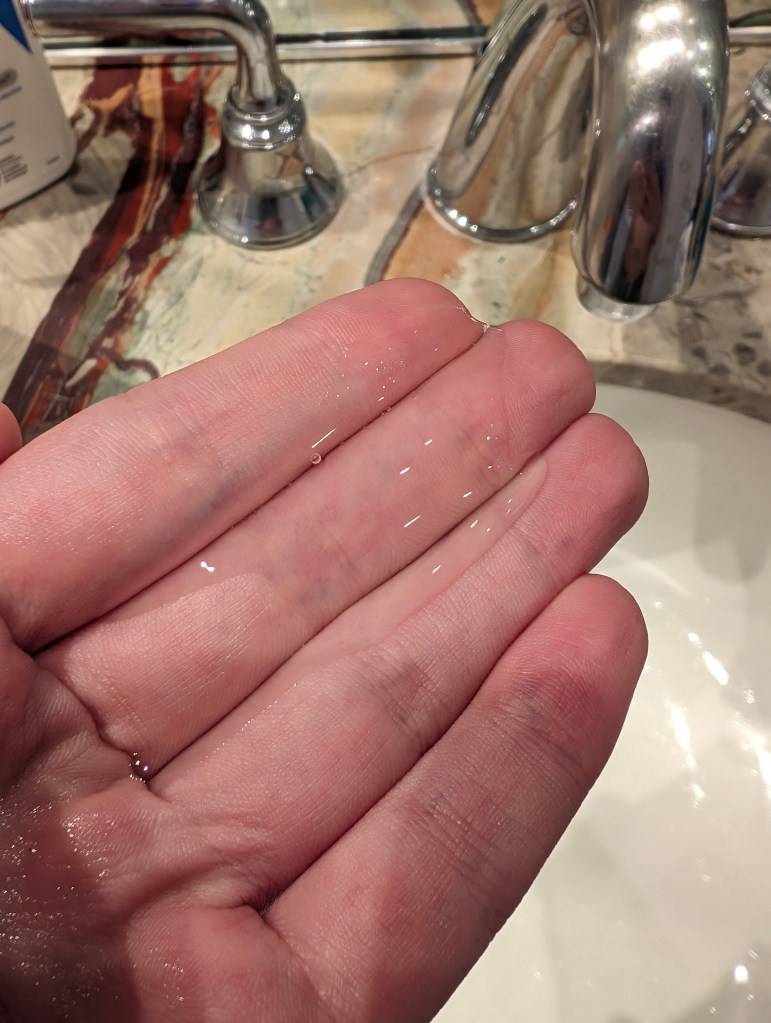
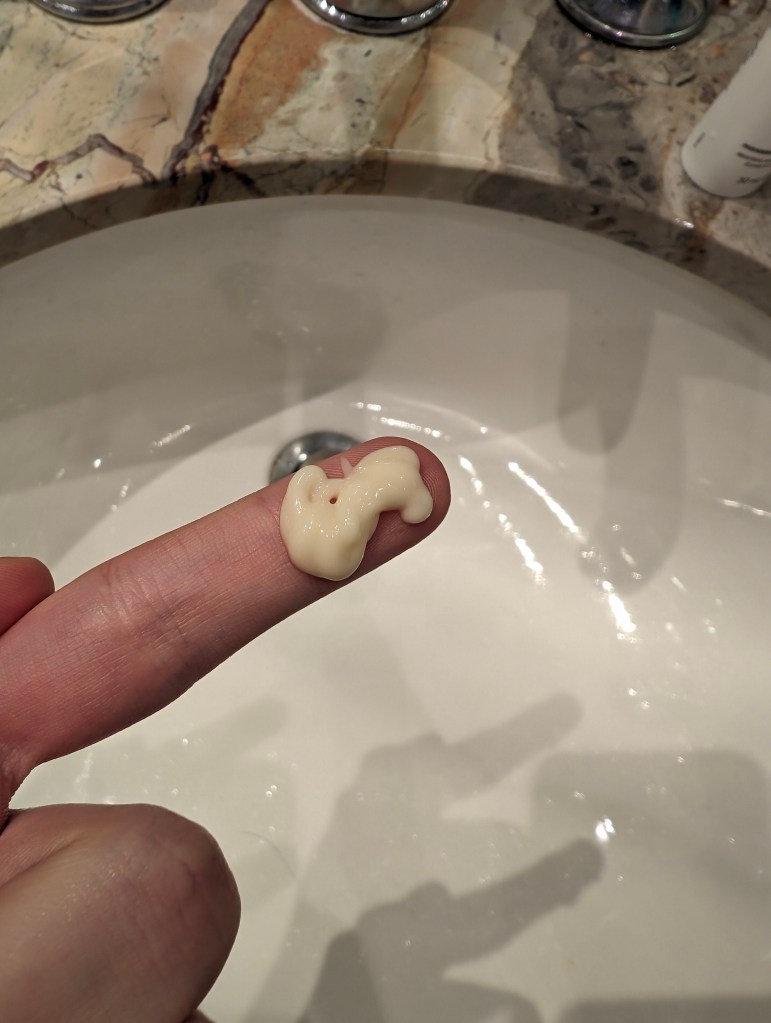
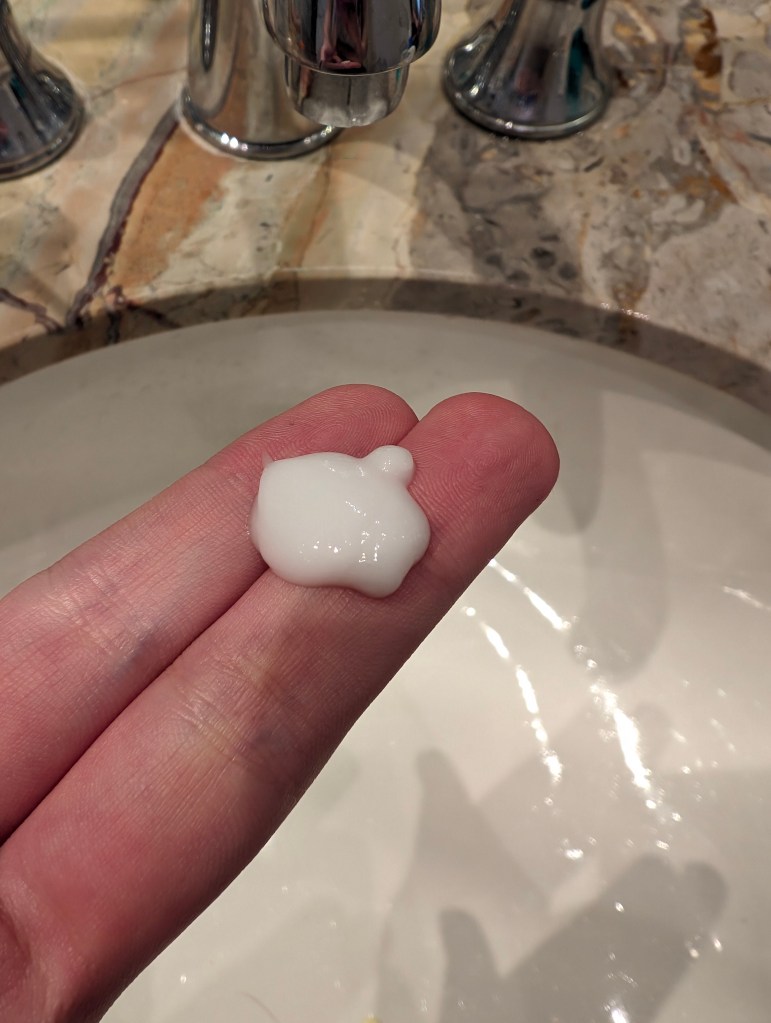
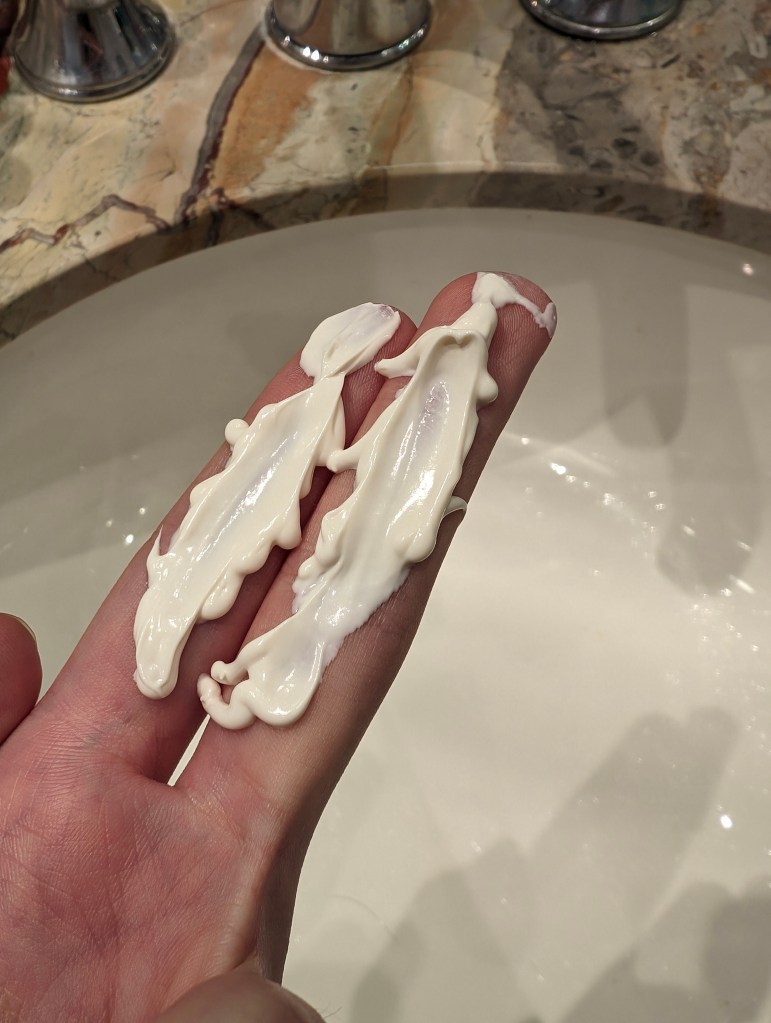
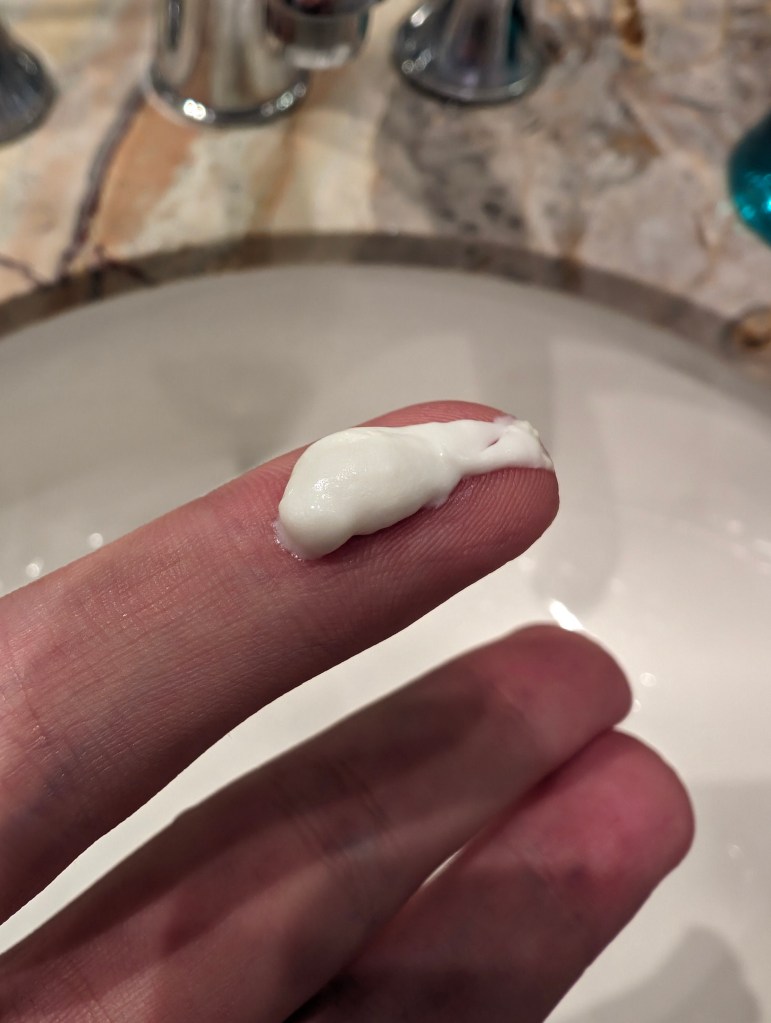
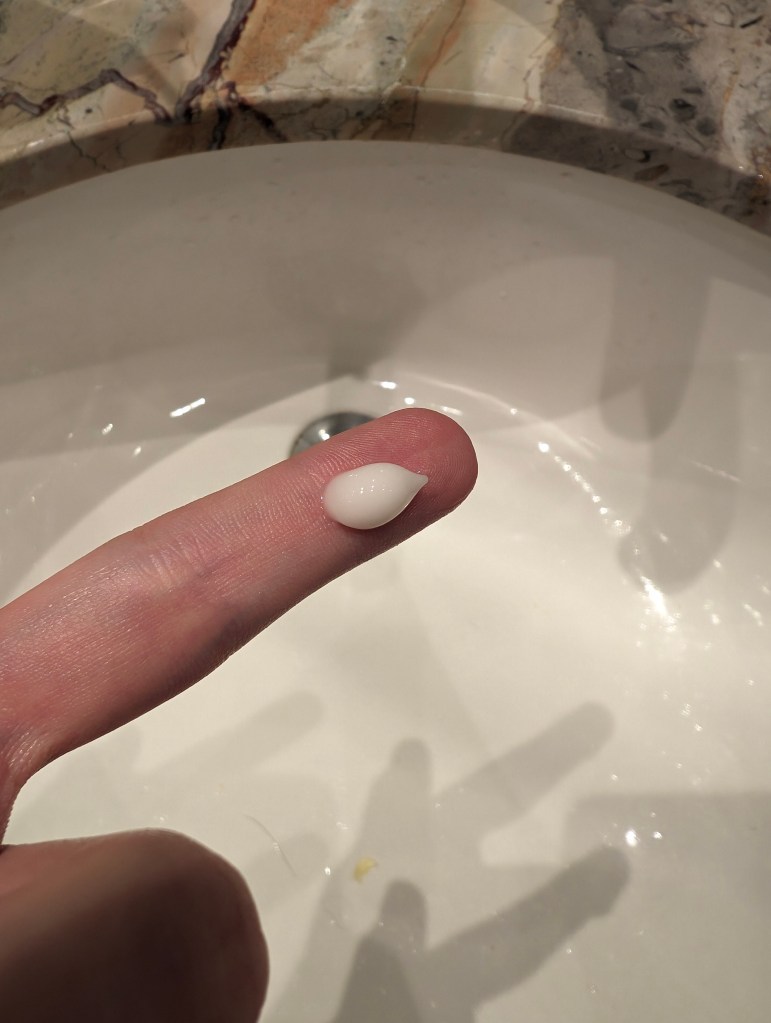
Sunscreen is always more than others because it needs to be evenly applied to all of your skin. The general recommendation by dermatologists is 2 finger lengths for face and neck. When trying new products try to avoid using them around the eye as they can irritate them and cause a prolonged burning sensation if your skin is sensitive to it!
There are multiple types of cleansers but as far as you should be concerned, just use one that is directed for your skin type. Meaning if you have dry skin, go for one that’s moisturizing. If you have oily skin, go for a foaming cleanser or one to remove oil (like an oil based cleanser). If you have balanced skin like I do, I prefer to use moisturizing cleansers because it means I won’t always have to use moisturizer afterwards.
This part of advice is for those who are doing hair removal treatments, whether it’s laser or electrolysis the same applies. You need to stop any retinol serums 5 days before your session (as it makes your skin more sensitive to hyperpigmentation (darkening of the skin) and head to your appointment with clean skin, so use your cleanser and don’t apply any other products including a moisturizer. Most places that I have been to at least will wipe down your skin with an alcohol wipe to disinfect things anyway so it’ll go to waste. If you need a numbing cream then you can use that but make sure you mention it to your esthetician.
When it comes to treating the sensitivity afterwards, you should be applying sunscreen all the time and minimizing sun exposure. You will also want a serum for ‘post inflammatory hyperpigmentation’ if you do electrolysis to minimize the spots or tiny scabbing.
Having a cream for reducing redness such as a zinc phthalate cream applied after the serum, but before the moisturizer. This will all help bring your skin back to normal faster.
The YouTube channel ‘Doctorly’ from 2 dermatologists have a good video on the topic: https://www.youtube.com/watch?v=j3yc9NMeGjk (which came out as I was writing this)
Products like ‘toners’ and ‘leave-on masks’ can help for certain issues but because they aren’t regulated terms it can be hard to find something that works properly. ‘Serums’ are a bit more regulated as far as active ingredients go but it’s still a gray area. Ask a dermatologist about products you have or want to buy for more specific information on them, In my experience the younger the dermatologist is the more they typically know about modern skincare as opposed to just skin conditions.
Other pro tips I have
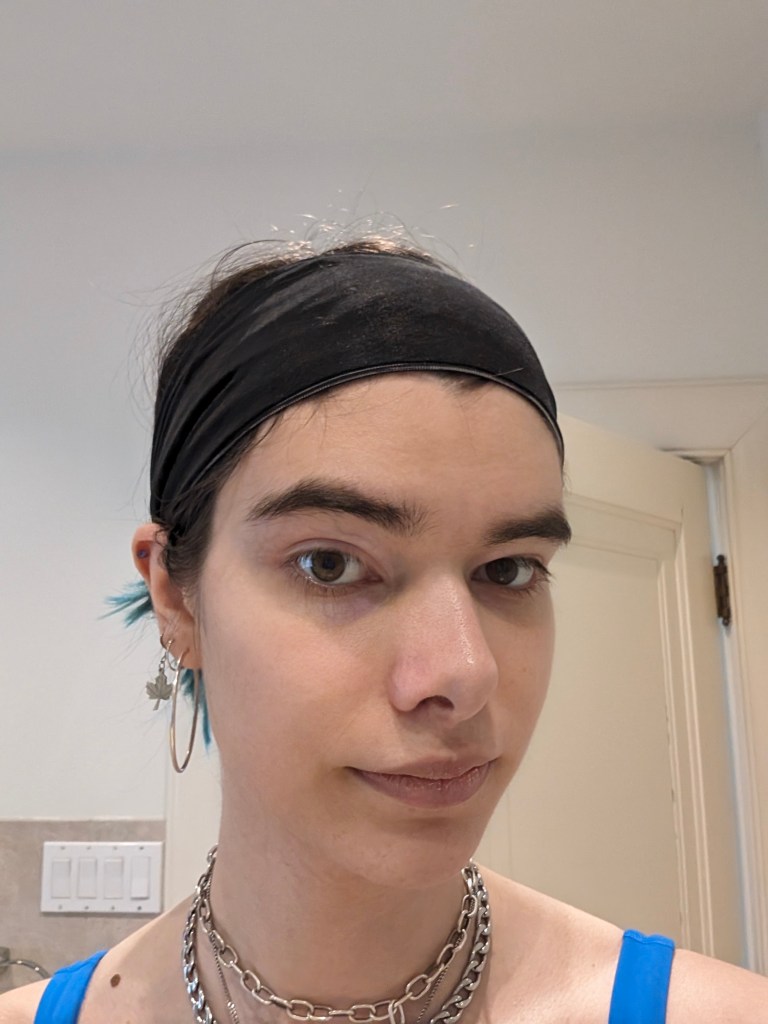
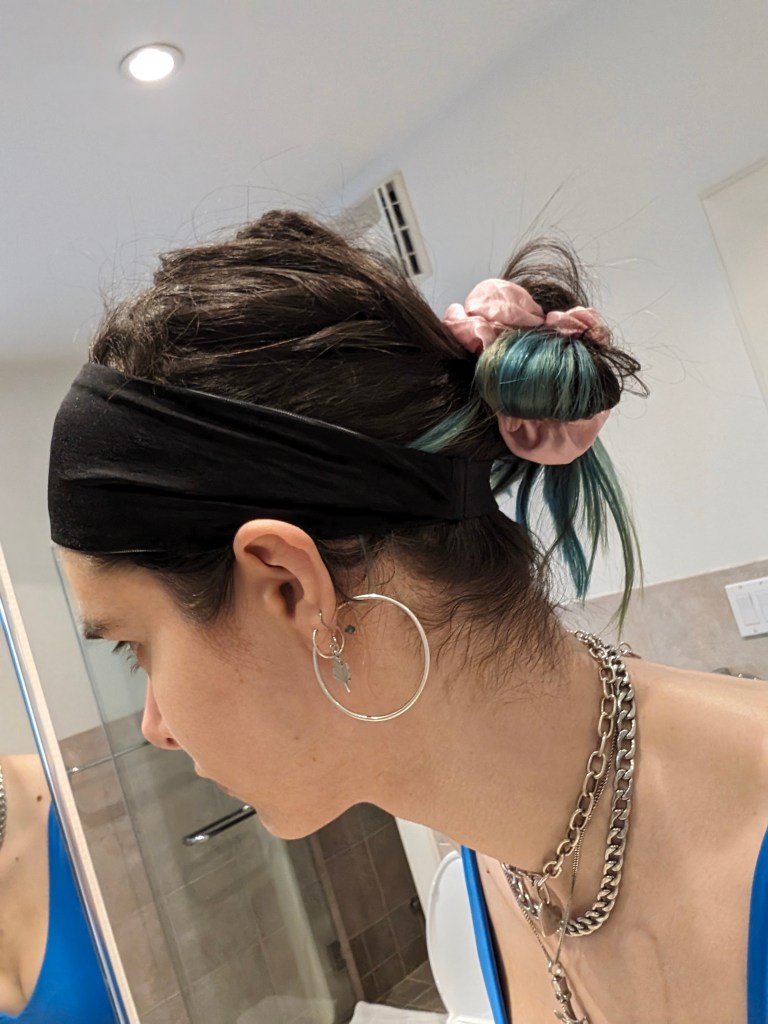
Wear a headband to keep hair out of your face when doing your routine. Something like this will keep your hair back and prevent any small wisps of hair for clinging to your face. Just flip your hair over the back of the headband and use a scrunchie or something to keep it from swinging around.
Using wristbands like this will also prevent water from rolling down your arms and getting all over the floor and counter.

- Form a routine and stick with it!
- If you don’t do it consistently, don’t expect many benefits
- Follow an order or steps for maximum effectiveness
- Target issues that you have
- Not everything needs to be done with expensive products! Try something and see if it works before making a huge commitment
- WEAR SUNSCREEN WHEN GOING OUTSIDE
 Transfemme Style
Leave a comment