Your body has quite a few things to measure and given the state of women’s clothing it can be really difficult to find your actual size when it completely changes across brands and there’s a few more things to measure that weren’t relevant when shopping in the opposite section. Obviously most of what goes here is for shopping online since you can try things on when shopping in person.
Now to follow along with basically everything I’m saying in this post you’re going to need a measuring tape. Also do all of these measurements while not wearing any clothes other than underwear, so if you’re measuring tops it’s ok to wear a bra if that is what you normally do. There’s a lot more to measure for women’s clothing and measuring tapes are just generally useful for things that aren’t flat.
Here’s a list of what’s covered for those who want to skip through
- Waist
- Rise
- Hips
- Inseam
- Leg Length
- Feet
- Bust / Chest
- Under bust
- Shoulders
- Arms
- Hands
- Fingers
- Neck
Your actual measurements aren’t going to change too frequently so try to only measure stuff twice a month at most. Also always check the size charts of brands for your measurements because one brand’s medium is another’s extra large, especially if they’re from different countries. Sizing in asian brands tends to be significantly smaller.
I’m going to go on a bit of a rant here so feel free to skip over this, although I thought some people might want to read on the struggles of sizing in realizing they aren’t alone.
Sizing for women’s clothing is honestly complete garbage. Never in my life have I seen something so inconsistent and vague and I often work with the government. Because trans bodies also tend to be different it can be incredibly frustrating when it feels like nothing is made for you either. Blouses will almost always not fit in a certain part, your shoulders, your arms, your hands might be hard to push through the hole unless you unbutton it, the waist is going to be too small for the size of your shoulders so you size up but then you have to spend an extra 20$ to get it tailored, but then you can’t fit tailor the bust to be what you need because there’s either too little fabric or too much fabric. It’s exhausting. I realize I come from a place of privilege as well in that at least I’m able to find clothes that fit me at all. But constantly being reminded of how I don’t fit in with the cis standards for women just feels like shit all the time. Things I never would have worried about like the width of my hands get me to wonder how much people actually notice in the real world. And I know they notice because if I don’t dress in a certain way they clearly highlights the feminine aspects of my body some people will misgender me. If sizing just was just more inclusive I don’t know how many of these problems I would have but the fact I feel like I NEED to show cleavage or tight clothing just to have my identity recognized is depressing. And most of the time I fall pretty damn close with all the size charts, my height is the exception to that but I can’t become shorter. So just know you aren’t alone when it comes to thinking sizing is dogshit because honestly I don’t know a single person who doesn’t complain about it, trans or cis. Taking measurements can be difficult mentally when you have to looking at the charts and compare yourself to where you think you should be but try to find comfort in the things that make you feel good rather than where you think you should be. It’ll be a forever moving goalpost if you try.
Waist
Let’s first go over how certain things have shifted into being defined in new places. The most obvious is the term ‘natural waist’. Because of how women’s clothing will sit at different heights along your torso and hips, what you used to measure as your waist meant wherever your pants sat, typically wherever the “waistband” of your underwear was or more simply, where you’d be wearing a belt for your pants.
Natural waist refers specifically to where your waist measurement is the smallest, which is typically around an inch above the belly button.
To measure this take the measuring tape and wrap it around this part of your body. Take a deep breath in and then exhale, ensuring you don’t flex any muscles as you want to be relaxed. Wherever the tape overlaps the beginning is your waist measurement.
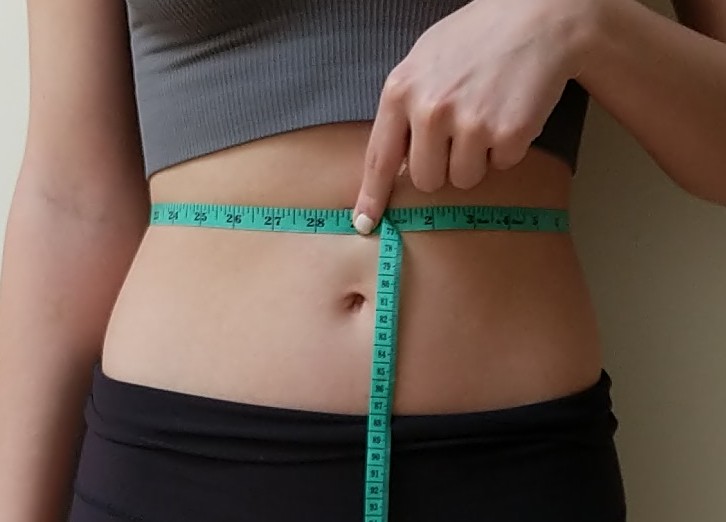
It’s also best to not do this on an empty stomach because as you eat throughout the day and potentially become bloated, your measurement can grow an inch so some people recommend sticking a finger between the measuring tape to account for that! This is why when looking at size charts that use the waist measurement as sizing, you’ll find the actual measurement for the piece to be an inch bigger than the size.
Your waist measurement may also vary depending on the rise of the garment! If something is low rise it means below the natural waist so you will have to re-measure it based on where the rise lands. Always check the rise of what you’re buying to make sure it fits where it hits your waist. I’ve purchased quite a few things that are either too big or small for my waist because I followed the waist sizing number without checking the rise.
Rise
Measuring the rise of something you’re wearing is simple, measure from the crotch to the top of your waistband. The rise of a garment is usually listed and so if you are unsure if they will fit you when ordering online, place the listed rise and make a mark to the height it lands on for your waist. From there, measure your waist to double check if it will fit you in the waist.
Some sizing will do this automatically for you (as in the waist will scale for the typical waist size you get). This means a size 29 could still fit someone with a 29 inch waist when buying low rise pants; but the waist of the pants itself may not necessarily be 29 inches.

Hips
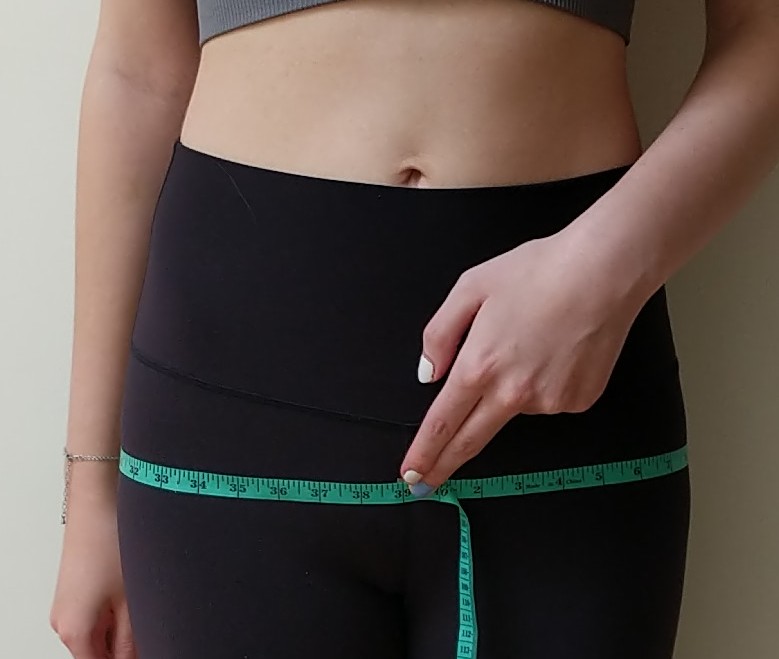
Next let’s go over the hips since these often directly relate to how brands do their sizing in relation to your waist. When it comes to measuring the hips it really just refers to your whole butt area.
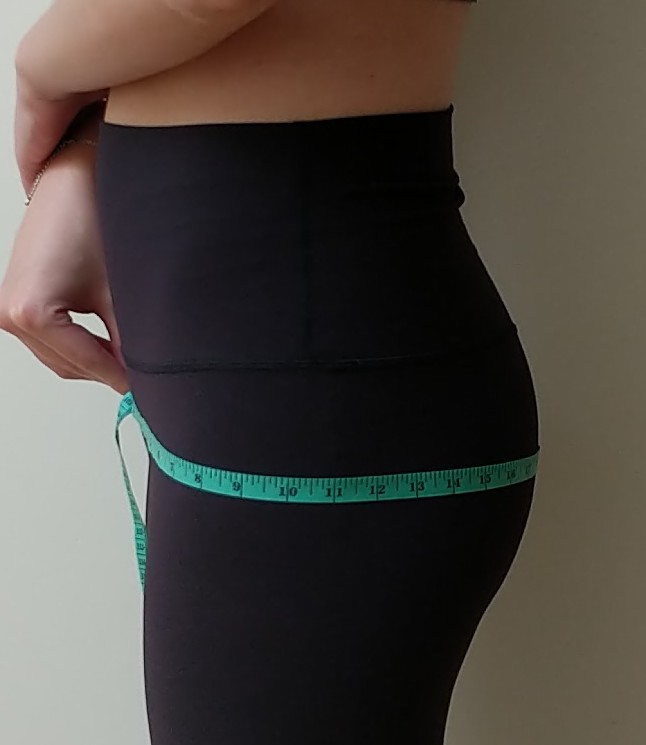
Take the measuring tape around your hips and butt, ensuring it’s at the same height all the way around. Turn sideways and double check it is at the fullest part of your backside as well. Do not pull the measuring tape too tight as to push into your flesh, and then overlap it to the beginning of the tape and that is your measurement!
If you work out your abductor muscles and glutes a lot this measurement should change a bit as you gain muscle but it generally has no short term variation.
Thighs
Thighs can also be something you might need to start measuring. HRT especially will change your measurement for this eventually and it can matter for certain pants.
Take the measuring tape and wrap it around your thigh at the largest part, for most people with will be right at your groin. You should also do this sitting down.
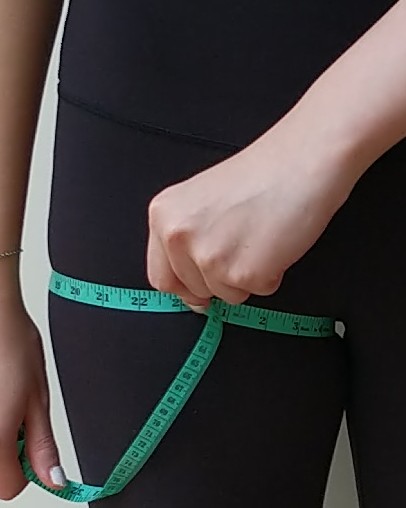
I say sitting down because that’s the position that makes your thighs appear the largest and sometimes you can really feel the stress on the fabric when you sit. The largest part of your thigh and where most brands measure it is parallel to the crotch of the pants.
Inseam
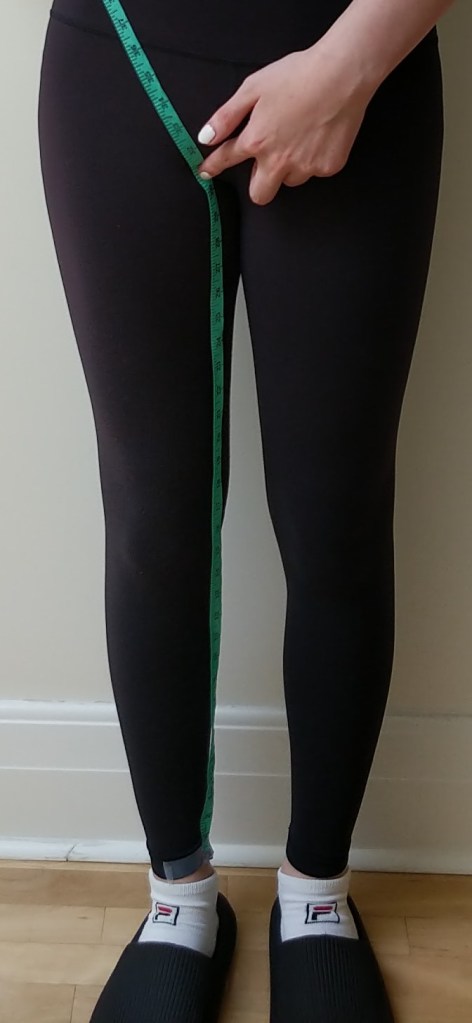
Inseam is a rather easy, measure from the crotch bottom of the pants down to your ankle. Add an inch or two if it’s difficult to reach. Measure laying on the ground or standing up if you can. You may also want to add an inch or 2 so the pants don’t appear too short when sitting down. You can do this without tape it was just difficult to take pictures without it.
Leg Length
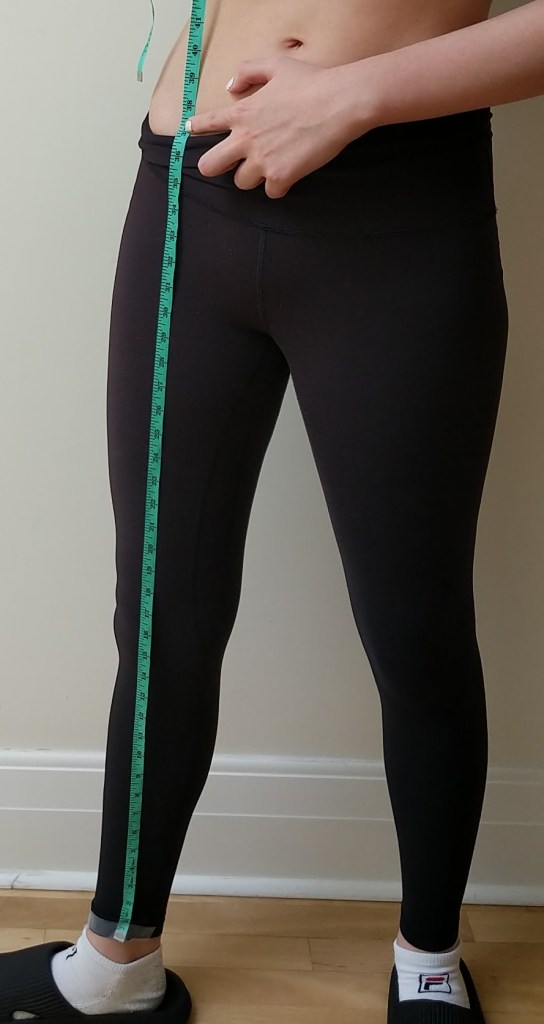
Leg Length is different from your inseam as it measures the entire length. It is easiest to do this on the floor. Pretend I am on the floor (it was too difficult to demonstrate and simultaneously take a picture on the floor). You probably won’t use this for clothing at all except when trying to get the rise of pants or to see where a skirt may land.
From the top of your hip bones measure all the way down to the top of your foot, not your ankle like in the picture.
Feet
Feet is challenging because it is arguably where sizing varies the most across brands. I prefer to use European sizing for shoes because it is unisex. There’s a few things that matter for your feet. Take all of these measurements with your feet flat against the floor while wearing your typical socks. Standing is best but feel free to crouch over like a crab.
- Bridge width
- Measure either around or under of where your toes meet your foot. It will be obvious based on the size chart which they use
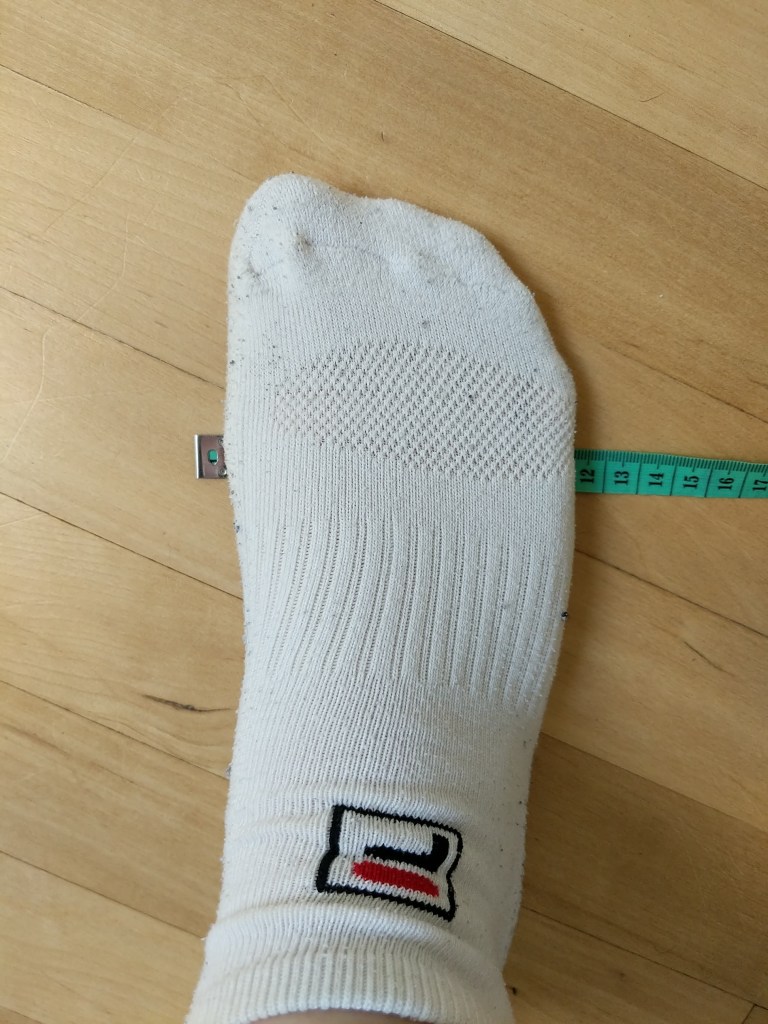
- Foot length
- This is what most commonly dictates how shoes are sized, they also typically increase in width a bit with each size as well. From the back of your heel measure to the tip of your big toe in a straight line. When it comes to the actual shoe you will want an extra half inch (~1.5cm) of room so your toes don’t ram into the shoe all the time since harder materials like leather boots will hurt more than running shoes.
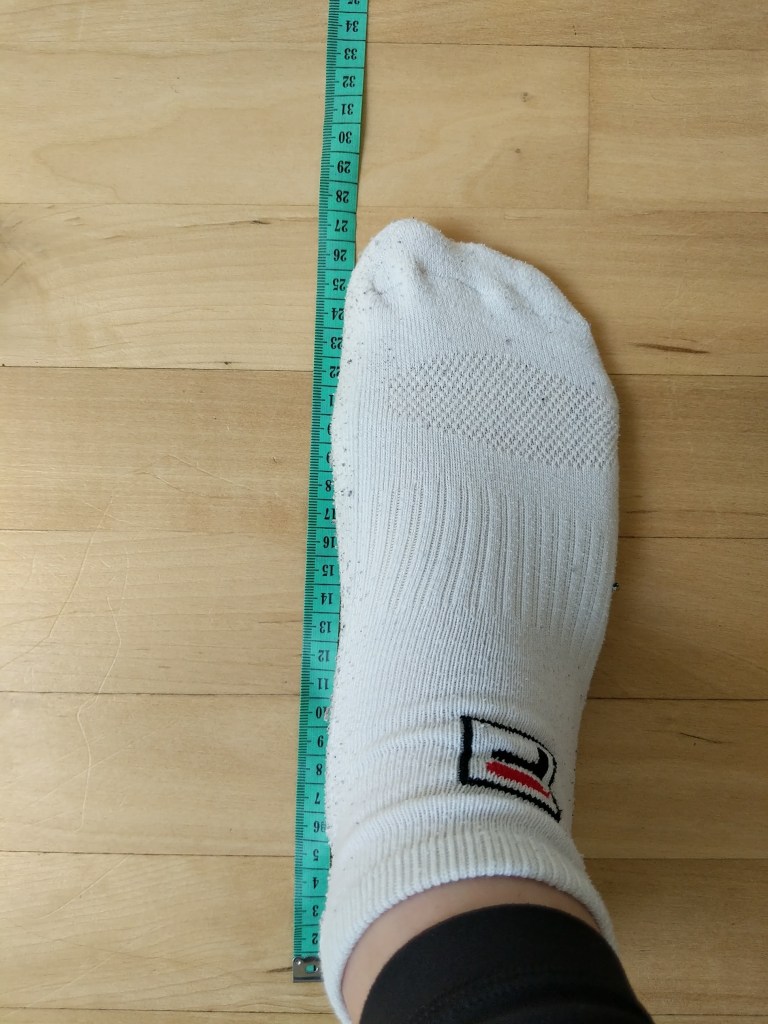
- Toe shape
- This matters more for the toe box but there’s no precise way to measure it. Just measure the width to see if it ends up being the widest part of your foot. If it is, consider the shape of the toe box on shoes you buy to not squish everything.
Shoulders
Let’s now move to the upper body where most of the struggle comes from.
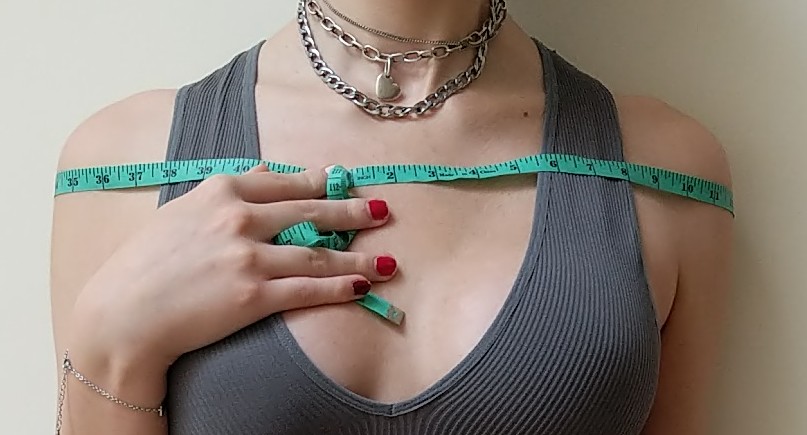
Starting with the shoulders it can be difficult to measure but is typically the most important. If you have someone who can help you do this it will be easier.
Bust / Chest
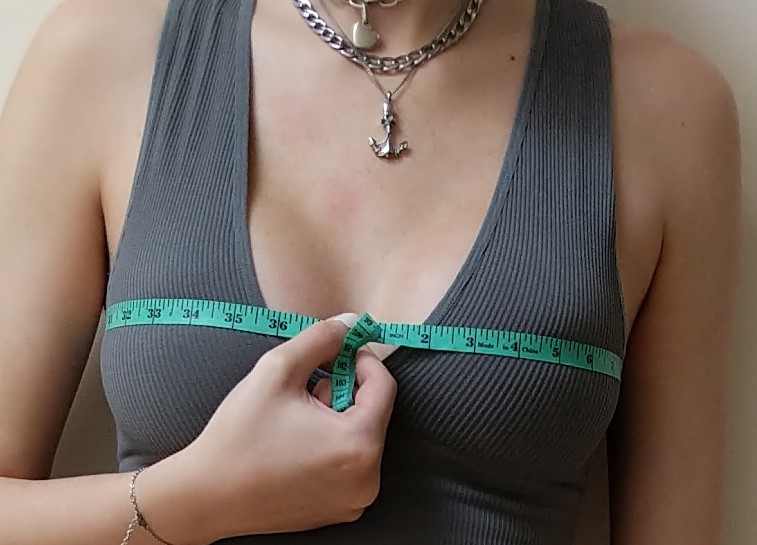
Bust is the measurement of the measuring tape at your nipple.
Simply take the measuring tape and wrap it around your body aligned with your nipple while standing up straight.
It may also be important to measure the length of your torso, so just take a measuring tape and measure down to your hip bones. Women’s clothes tend to be pretty short in length overall so that’s why I always wear high rise, to make up that lost distance.
Under bust
Under bust or band size is just the measurement beneath your breasts.
Take the measuring tape where your breasts start and measure around your body.
Now if you have certified organic breasts, you can measure where the breast starts to fold onto itself as a better indicator.
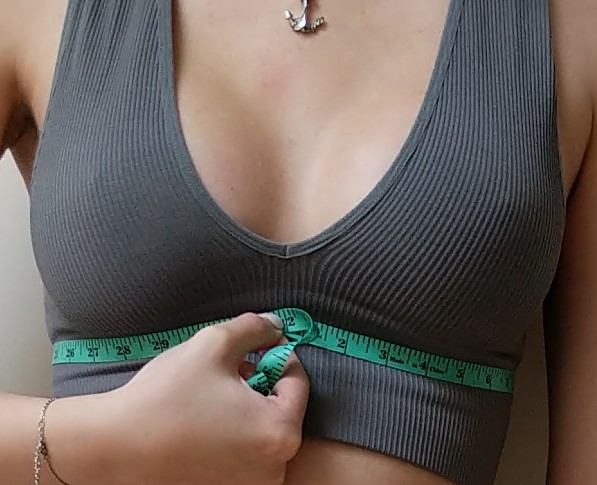
Generally, to get your bra size, it’s the (Bust) – (under bust) = bra size
I would also highly recommend the subreddit r/abrathatfits as they have a calculator linked in the top menu and good recommendations. Bra sizing is never consistent so going there can be very helpful.
Sleeve Width / Arms
Sleeve width is another tricky measurement because some of us might have bigger arms either from muscle or fat deposits after starting HRT since it will store fat in your upper arms. There are some jackets I own that have become really tight in the sleeve because I retained muscle and increased my fat deposits.
To measure this you can either
- Press your arms against your torso and measure the widest part (typically at the bicep)
- Flex your muscles in the air and measure that
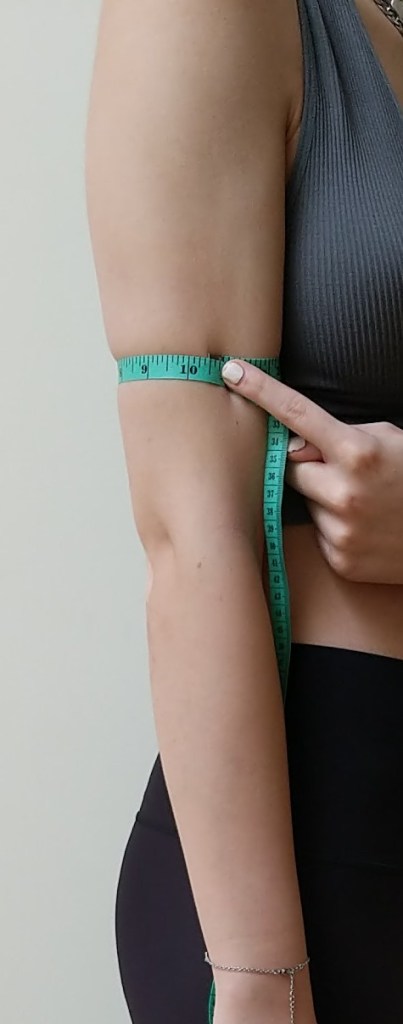
I prefer method 1 but for pieces you might be doing more movement in, method 2 can work better if you’re built that way.
Fingers
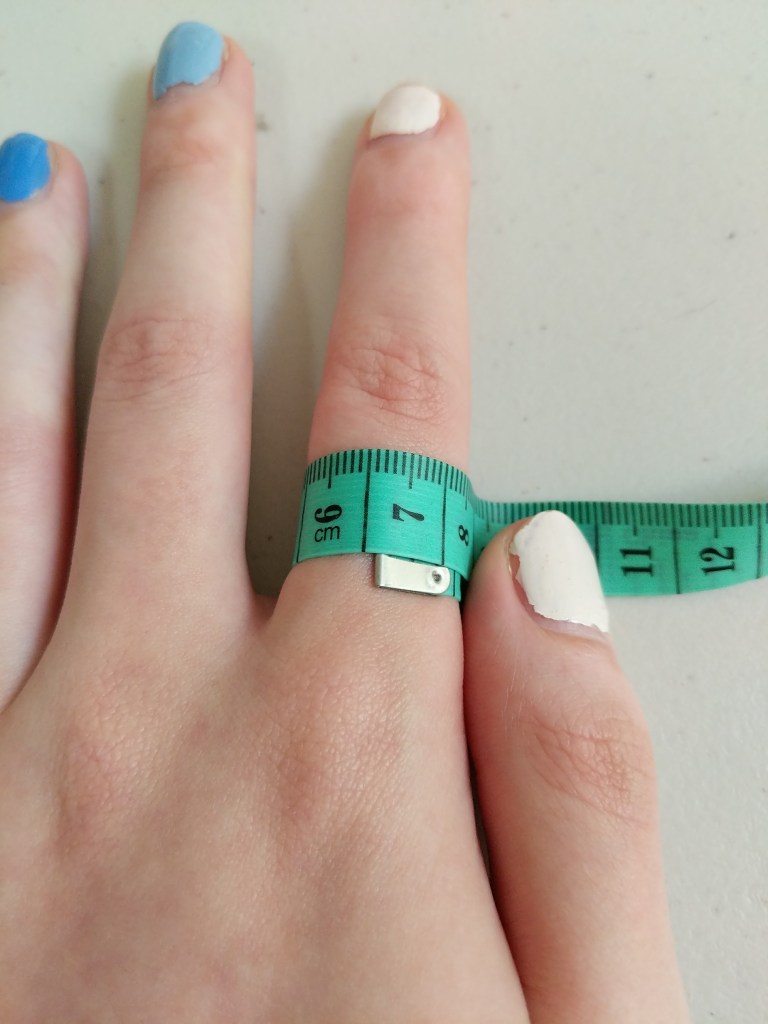
Fingers can be tricky since they tend to swell based on the season. Your ring size may be half a size larger during summer compared to winter where the blood vessels in your hand constrict due to the colder temperatures. I will usually buy rings in spring or winter so the sizing can be + or – for the seasons.
If you don’t have a measuring tape you can also use a piece of paper or string in the same way. Wrap it around, mark the distance and then measure it with a ruler after laying it flat.
Hands
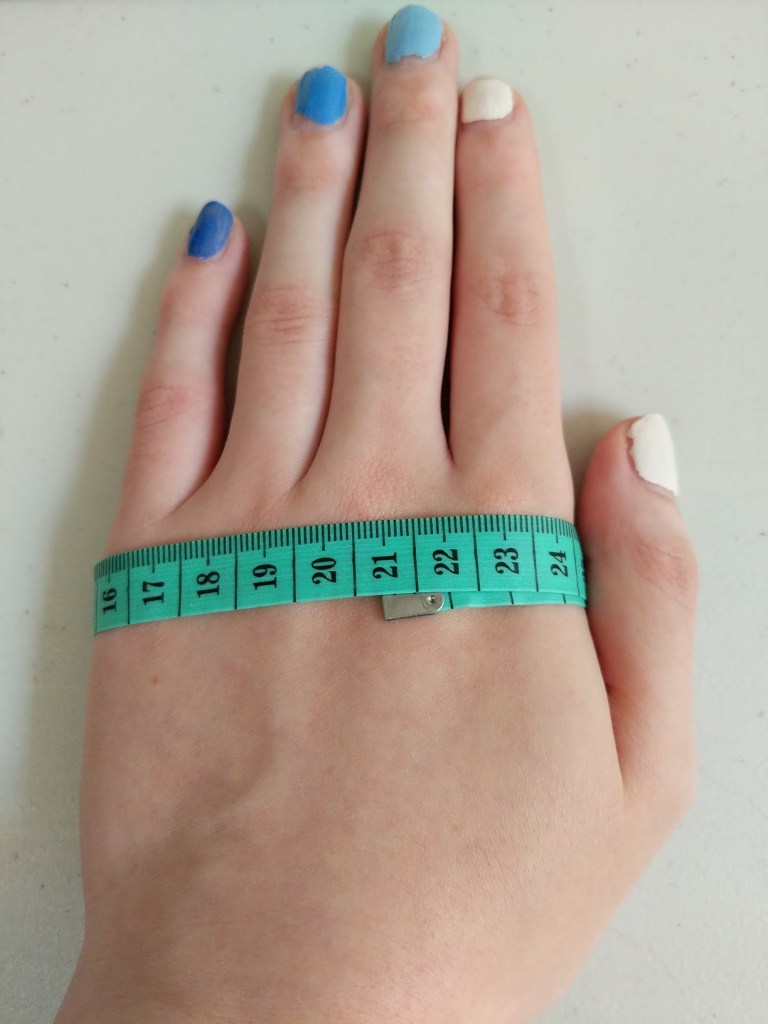
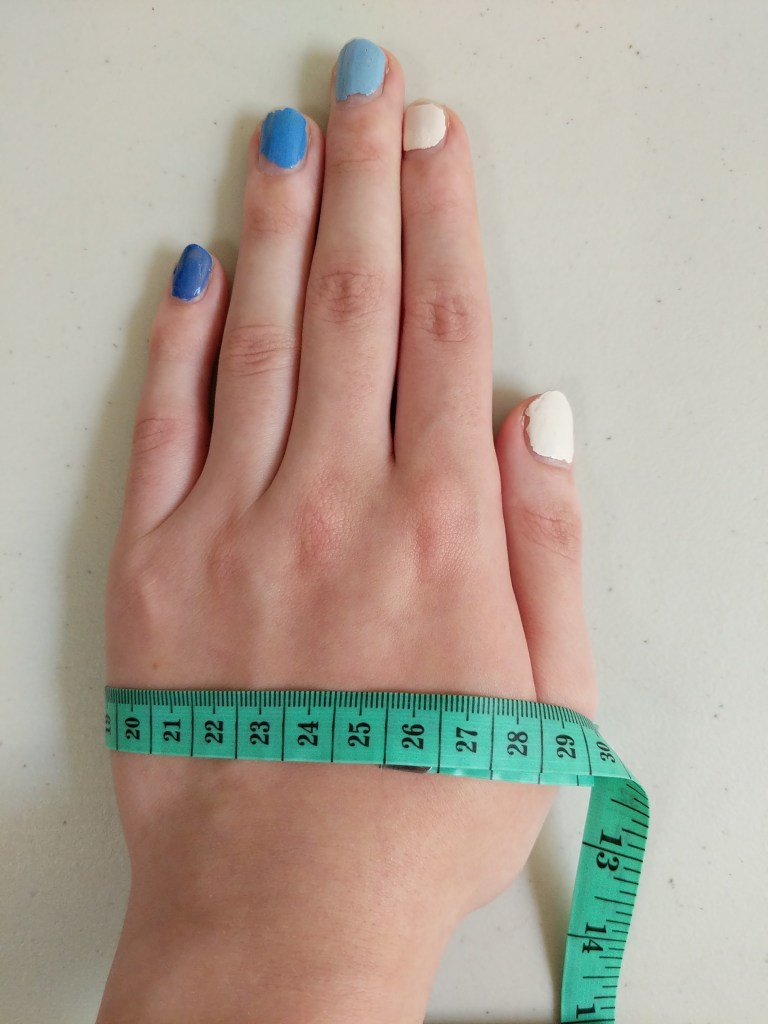
Hands typically only matter for gloves because naturally estrogenized people have very narrow hands.
Measure at the joint connecting your thumb to the rest of your hand and across the base of you fingers here. Most size charts will specify which to use.
Neck
You also might want to measure your neck at some point for jewelry so here’s how to do that as well.
Take the measuring tape and place it around the base of your neck like this.
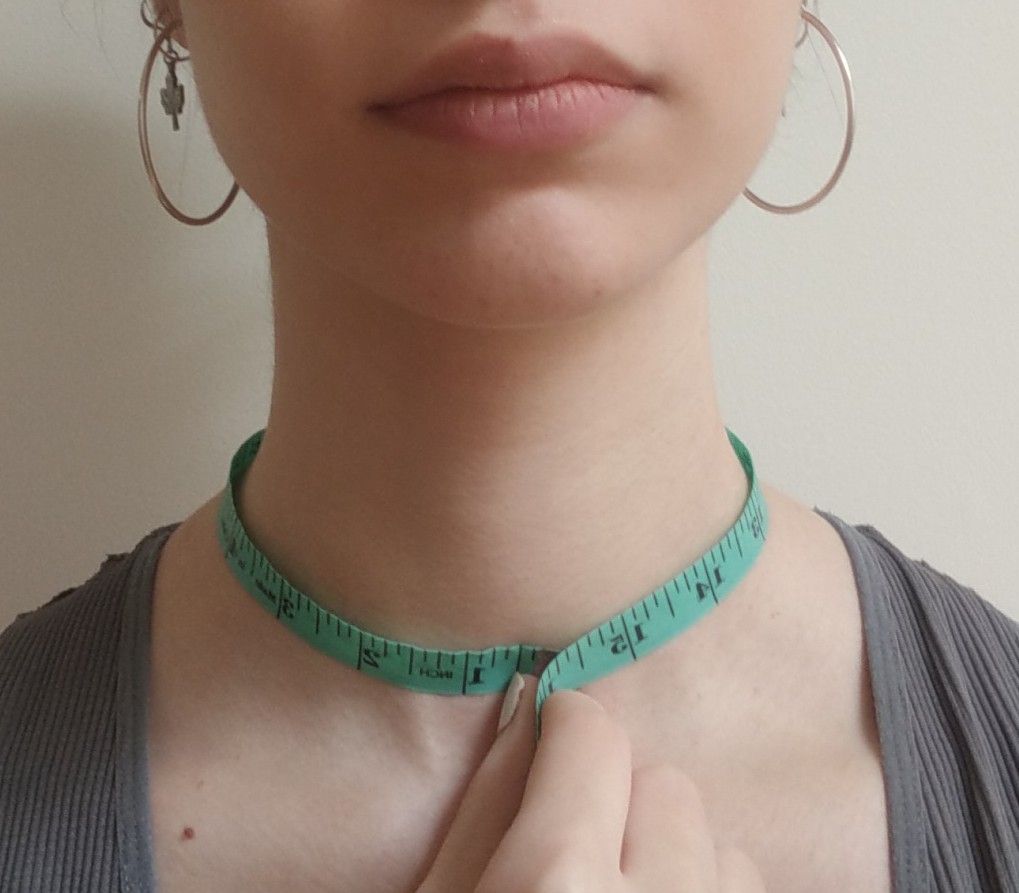
It’s also a good idea to measure for non-choker necklaces by simply placing it around the back of you neck and measuring to where the length of the chain would land.
If there was anything I missed feel free to let me know with a comment! Same goes for it anything wasn’t that clear 🙂
 Transfemme Style
Leave a comment