
Color theory is a universal concept, if you have learned it for things like photography or film a lot of the same things apply. Color is very important in fashion because it brings things to life. Color palettes are very different from one another but they all have correlations to each other.
There are a few main concepts to make color in your outfit work as well.
- The choice of your color palette or ‘group’
- Contrast between pieces
- And balancing your colors with shades (black, white,etc)
Not everyone has the same favorite color and that’s perfectly fine but you should have yours in mind when creating your wardrobe. I for example like cool colors a lot more so I have much more green and blue in my wardrobe than I do red.
Colors can be divided into 2 main categories and 4 sub categories
Actual colors
Warm colors (red, orange and yellow)
Cool colors ( green blue and purple)

And then we have the other category
Balancers
Neutrals
And Shades, tints and tones (colors with amount of black, white or gray mixed in)

Actual colors are what’s on the rainbow, the full spectrum of colors. These can be intimidating because they should be the main eye-catching point of your outfit. You don’t want to overdo it with colors because then it can be irritating to your eyes and having too much solid color rarely looks good without something special about it. This is where ‘Balancers’ come in
Neutrals are more ‘boring’ colors, the things you see in most offices as they are inoffensive to the eye and can be easily matched with basically any other neutral or shade without much thought, examples would be navy, tan, light gray, etc.
Black and White play an important role in bringing down the aggressiveness of colors so they don’t overwhelm your outfit. Gray is also included. Mixing these with colors will give you a tint (adding white), shade (adding black) or tone (adding gray). These can be important for color blocking as well as finding analogous colors to use in color harmonies
Warm colors are aggressive. Red is the most eye-catching color of all and it’s important to remember that when it comes to warm colors, less can be more. I will have more posts going into individual colors more in depth. Having an outfit be completely red might look a lot worse compared to an all blue outfit.
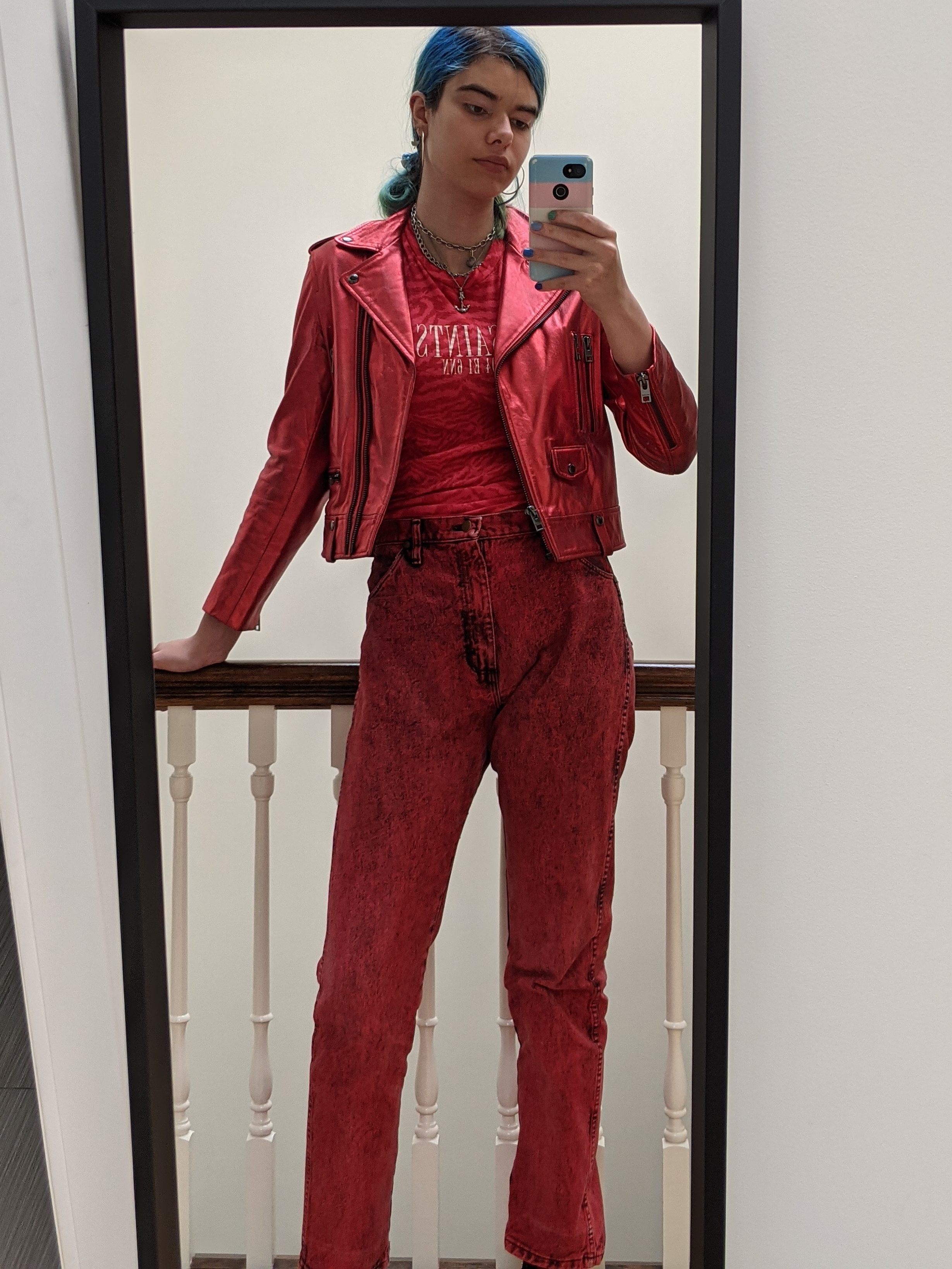

If we compare these 2 I think it is rather clear that the all red outfit does not look as good as when using white and black as ‘balancers’
Cool colors are easier on the eyes, this is because blue and green in nature are very abundant so we have evolved to be more relaxed and also pick up on smaller discrepancies in those colors. Purple is a bit of an exception as it doesn’t really occur naturally that much outside of flowers but still is in the same category.
Here you can see the color spectrum, as you might be able to tell, green to purple takes up far more of what we can see than yellow to red does. This is also why I count there being 2 colors for green, blue and purple as being light/dark green , etc for each of those colors as there is a much wider range to choose from.

Now once you decide on what kind of color categories you like or want for an outfit you should look for a palette that goes with it. There are a few tools online to do this easily like https://coolors.co/ (very good website but a bit more technical in terminology) but I will also explain how to do it without any tools.
- Remember you categories
- Cool colors go better with each other than warm colors for the most part and vice versa
- Don’t mix subsets like neon with neutrals as they will clash and it will look bad
- Stick with a few colors, I say 4 main colors at most, and highlighted details (like an iron on patch) can have more
Contrast will make things appear more ‘chic’ or ‘elevated’ as it brings far more attention to the colors and lets them stand out. White will look ‘chic’ while black will look ‘edgy’ (edgy does not mean bad)
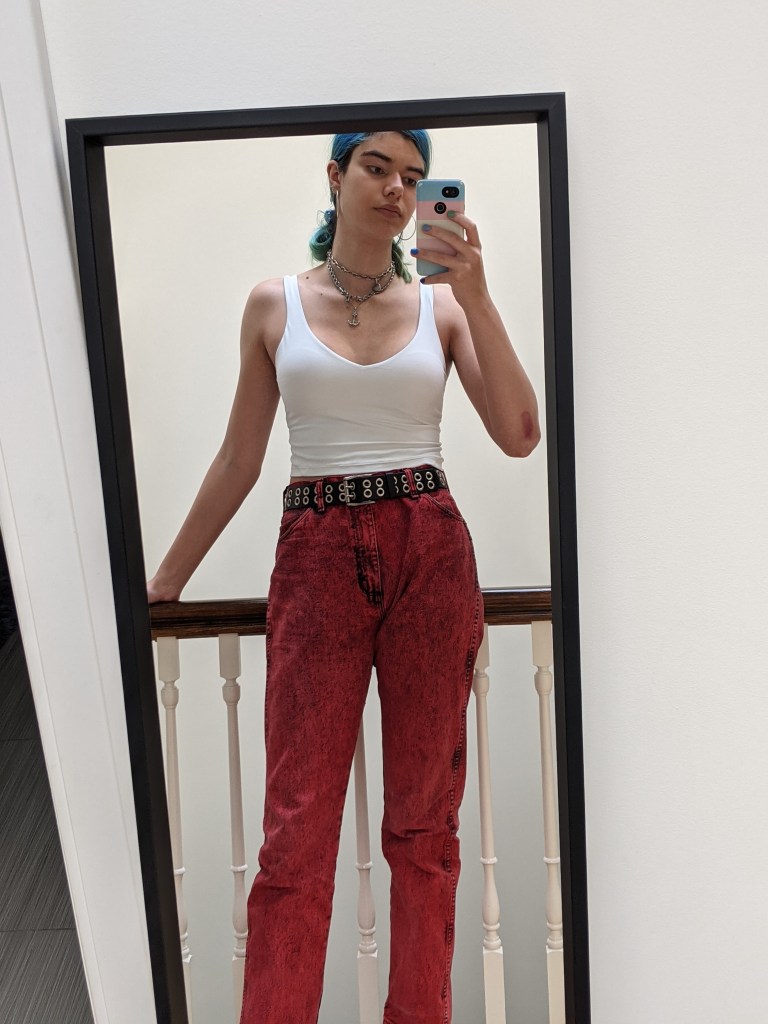
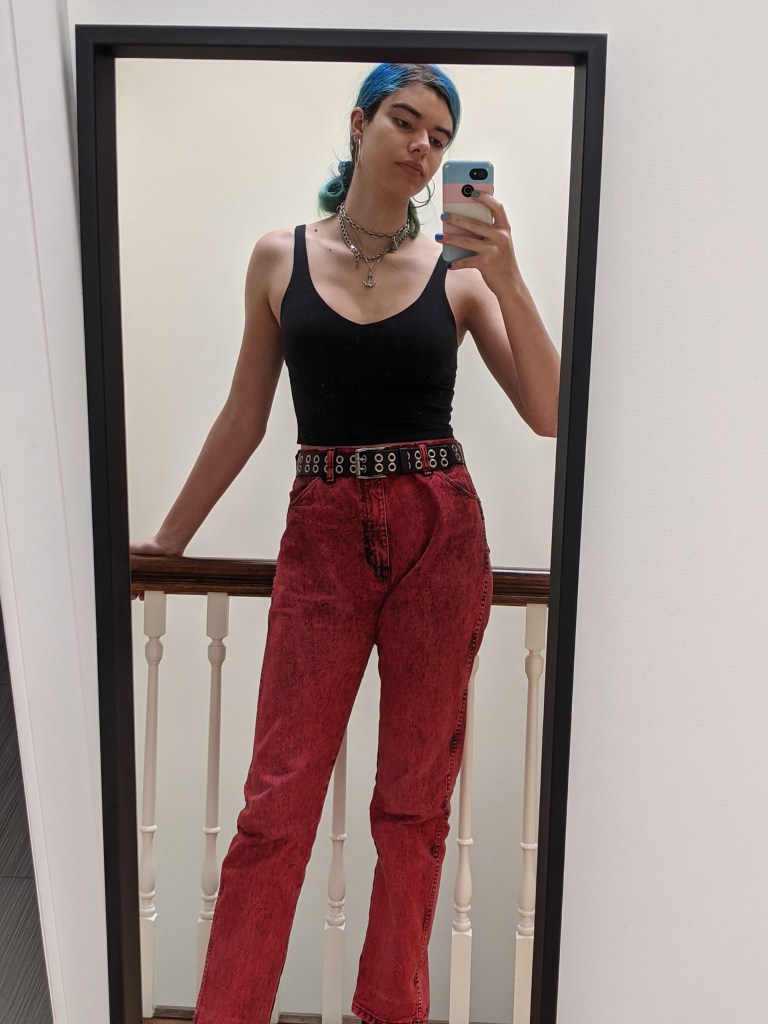
Don’t use too much color. There can always be too much of a good thing so keep in mind if you look at your outfit and it’s nothing but color, you might want to change it. There will be another post about color blocking later, but for now see the all red outfit above for an example.
Use color harmonies or palettes when unsure if something goes together. They are a reliable way of having things match, just find the right balance of color (like which to use as the main color that takes up most of your outfit) Having a color chart like this on a poster somewhere might be useful to you.

Pick colors based on the setting, neon isn’t exactly something you’d want to wear to a business meeting but neutrals are. Colors are associated with things so keep that in mind when you ‘have’ to dress for the environment you’re in.
Use Accents for colors! Not every piece has to be a color, sometimes just having little details like red on this skirt
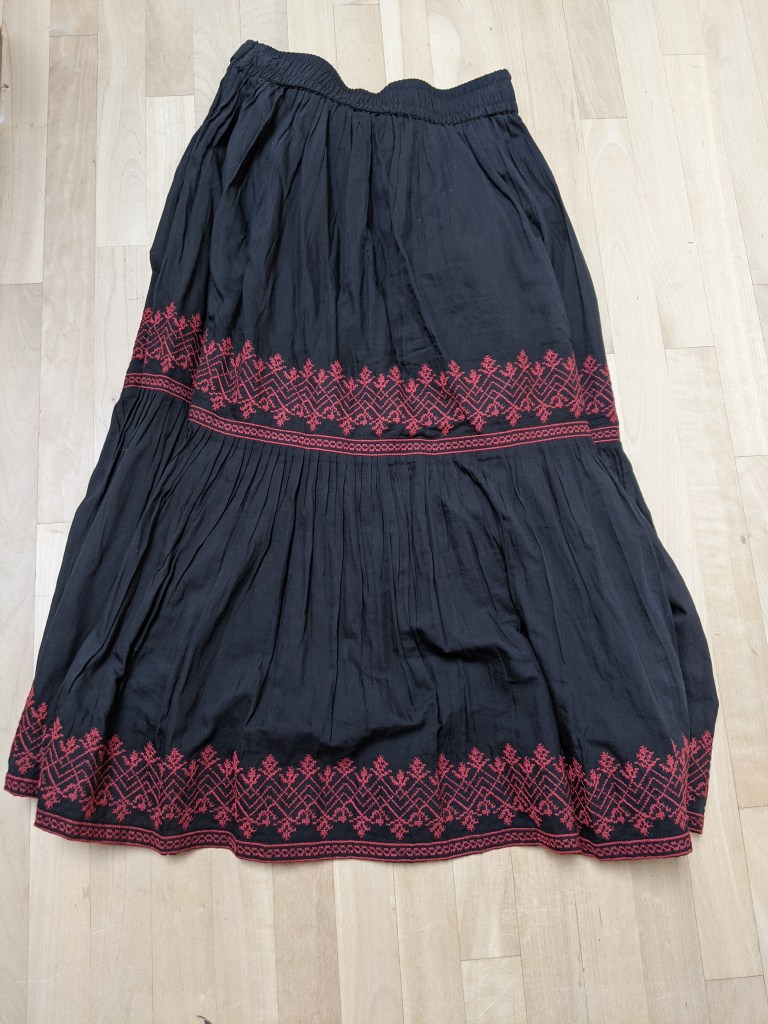
or the black, red and blue on the hoodie can be enough to add some color and nice detail.

Have fun! Color isn’t meant to be a challenge that leaves you frustrated or is operated by a strict set of rules that you must follow. If something looks nice to you and that’s all you care about then that’s fine.
So in Summary
- Know your color groups
- Balance bright colors with neutrals and shades
- Keep color groups within themselves, so don’t mix neutrals and neon colors, or match pastels with other pastels
- Use tools online for color matching if you are unsure of what to do
- Accent colors can elevate a look, and are great for matching main pieces
 Transfemme Style
You must be logged in to post a comment.